
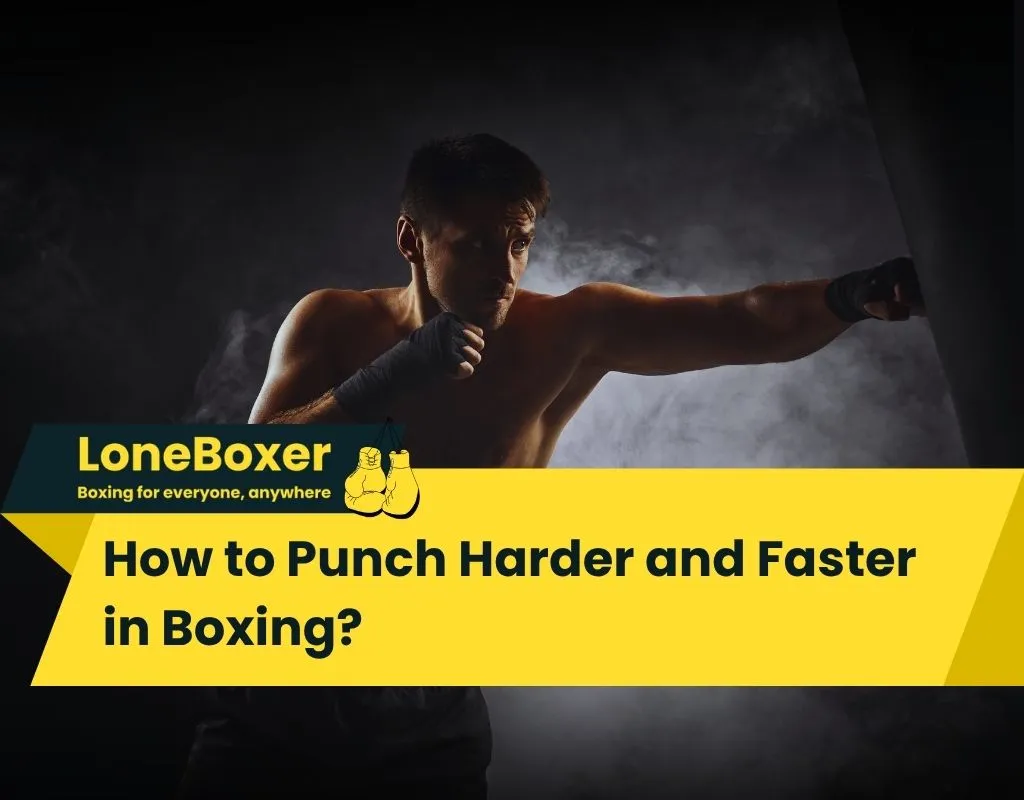
Punching in boxing refers to delivering a strike to one’s opponent with a clenched fist, utilizing the kinetic chain of the body to generate force. Energy is transferred from various body segments: from the legs, body, and hands. Effective mass and velocity, enhanced by weight transfer and technique, are key to a forceful punch. Greater power can naturally lead to increased speed, but without mass behind it, a fast punch lacks potency. To elevate punching power and speed, boxers refine techniques, build strength, and engage in specific exercises and drills. Common errors in generating punch speed and power include overextension, telegraphing, poor footwork, neglecting defense, excessive tension, improper breathing, inadequate body rotation, and inconsistent practice. To deliver a knockout punch, one must generate power from the ground, rotate hips, pivot the foot, and strike with precision, aiming for vulnerable areas while maintaining balance and defense.
How the Power of a Punch Is Generated?
A punch’s power originates from the kinetic chain, a sequence of body movements where each segment transfers energy to the next. Research by Filimonov et al. (1983) on the biomechanics of boxing determined that effective mass, velocity, and technique are crucial for a forceful punch.
Effective mass involves weight transfer. The puncher shifts body weight from the rear foot to the lead foot, engaging leg muscles to initiate the power surge. This weight transfer is essential for momentum, as supported by a study from Smith (2006) on biomechanical analysis of boxing punches.
The body rotation amplifies power. Hinging at the hips, rotating the torso, and extending the arm synchronously, the kinetic chain maximizes force output. A study by Walilko et al. (2005) on the biomechanics of the stand-up strike found that hip rotation significantly contributes to punch force.
Thus, coordination across the kinetic chain, legs, hips, torso, shoulders, and arms, is vital for a potent punch. Proper alignment and timing ensure energy flows efficiently from the ground up, culminating in a powerful impact.
What Muscles Generate The Power of the Punch?
For a straight punch, the triceps, deltoids, and pectoral muscles generate the most power. The triceps extend the arm, the deltoids provide the punching motion, and the pectorals add force.
For a hook punch, the biceps, latissimus dorsi, and obliques deliver significant power. The biceps bend the arm, the lats contribute to the swinging motion, and the obliques assist in rotation.
For an uppercut, the biceps, pectorals, and deltoids are crucial. The biceps flex the elbow, the pectorals help lift the arm, and the deltoids aid in the upward thrust.
For a cross punch, the triceps, pectorals, and deltoids are primary. The triceps straighten the arm across the body, the pectorals provide force, and the deltoids work in conjunction with the body’s rotation.
For a jab, the deltoids, pectorals, and triceps are key. The deltoids initiate the punch, the pectorals add power, and the triceps extend the arm.
What Role Does Body Weight Transferring Have in Generating Force and Speed?
Body weight transfer is crucial for maximizing force and speed in physical activities. It leverages momentum, thus enhancing the power behind movements. In boxing, for instance, pivoting the rear foot and rotating the hip transfers weight from the back leg to the front, increasing punch force. Similarly, in sprinting, shifting weight from one leg to the other propels the runner forward, boosting speed. This dynamic weight transition exploits the body’s kinetic chain, where energy flows from larger to smaller segments, culminating in rapid, forceful actions. Hence, effective weight transfer is fundamental for athletes seeking to optimize performance.
How Does Breathing Technique Affect the Speed and Power of Punches?
The breathing technique significantly impacts punch speed and power. Proper exhalation sharpens focus and tightens core muscles, thus enhancing punch force. Evidence from a study in the Journal of Strength and Conditioning Research indicates synchronized breathing with strikes improves kinetic chain efficiency, leading to faster, more powerful punches. Conversely, irregular or held breaths can cause muscle tension and reduce striking velocity. Hence, disciplined breathing is crucial for optimal punching performance.
How Does the Timing of First Contraction Affect the Punch?
The timing of the first contraction impacts punch effectiveness. A clenched fist at the moment of impact maximizes force transfer. Studies in biomechanics indicate that premature or delayed clenching can reduce power and increase injury risk. Optimal contraction synchronizes with the arm’s extension, thus enhancing the punch’s velocity and stability. Hence, precise timing is crucial for maximizing impact and safeguarding the hand.
How to Increase The Speed and Power Of Your Punches?
To boost punch speed and power, use the strategies listed:
- Perfect your stance and alignment; a stable base maximizes force transfer.
- Sharpen your technique; proper form ensures efficient motion.
- Strengthen your core; a solid core contributes to harder strikes.
- Increase wrist, shoulder, and forearm strength; this enhances punch stability and impact.
- Practice speed drills; speed drills improve fast-twitch muscle response.
- Work on explosive power exercises, like plyometrics; various resistance exercises boost overall striking force.
- Incorporate heavy bag work; punching an object builds power through resistance.
- Focus on cardiovascular fitness; stamina allows sustained punching intensity.
- Use shadowboxing with resistance bands; resistance adds difficulty, improving speed and power.
- Analyze and adjust; continuous learning helps refine technique for optimal performance.
1. The Jab
To generate more speed and power in a jab, shift weight from the rear foot to the lead foot. Simultaneously, rotate the torso, extending the lead arm quickly. Snap the wrist upon impact, maximizing force. During the extension of the punch, turn the fist as rotation adds power and stability to the punch. Coordination of these movements is crucial for an effective jab.
2. The Cross
To generate speed and power in the cross, a boxer shifts weight from the back foot to the front foot. The rear heel lifts, driving the hip forward. Simultaneously, the torso rotates, channeling force from the lower body to the fist. The arm extends straight towards the target, with the shoulder propelling the punch. The wrist snaps at the moment of impact, maximizing the cross’s velocity and force. Like the jab, the rotation of the fist plays a crucial role in the execution of the cross and contributes significantly to its power. Proper alignment is crucial; the punch should travel in a direct line, ensuring minimal energy loss.
3. The Hook
To generate speed and power with the hook, shift weight from the back foot to the front foot, similarly with the cross. This transfer harnesses kinetic energy from the legs, propelling the fist forward. Simultaneously, rotate the hips to amplify the force. Extend the arm swiftly from the shoulder and snap the wrist at the punch’s culmination for added velocity. Tighten core muscles for stabilizing the torso and enhancing the blow’s impact. Proper breathing and exhaling on the strike sharpens focus and increases punch speed further. Thus, synchronized body movements and weight shifts are crucial for a forceful, rapid hook.
4. The Uppercut
To generate more speed and power in an uppercut, shift weight from the back foot to the front foot, similar to other boxing punches. Simultaneously, drop slightly at the knees, then drive the fist upward, rotating the hips and pivoting the same-side foot. Tighten the core to channel energy upward through the arm, elbow bent, fist driving in a tight, upward arc toward the target. Proper alignment ensures maximum impact; thus, the shoulder should align with the hip and heel at the punch’s peak.
What Strength Exercises Help To Increase Punching Power?
Strength exercises to increase punching speed are listed below:
- Push-ups: Enhance straight punches. They build chest, shoulder, and tricep strength, crucial for a forceful jab and cross.
- Kettlebell Swings: Target all punches. They develop hip explosiveness, translating to increased power in hooks and uppercuts.
- Rotational Medicine Ball Throws: Boost hook power. They improve core rotational strength, which is essential for the torque in hooks.
- Kettlebell Snatches: Amplify uppercut force. They strengthen the shoulders and hips, providing a solid foundation for a powerful uppercut.
- Deadlifts: Benefit all punches. They fortify the posterior chain, enhancing overall punching strength.
- Squats: Elevate all punch power. They build leg and core strength, key to punch force transfer from the ground up.
- Plyometric Push-ups: Propel straight punches. They increase fast-twitch muscle fibers in the chest and arms, vital for a swift jab and cross.
- Kettlebell Turkish Get-ups: Strengthen all punches. They enhance shoulder stability and core strength, supporting punch structure and delivery.
- Medicine Ball Slams: Improve overall punching power. They engage the entire body, helping to develop the explosive strength and coordination necessary for powerful punches.
- Battle Ropes: Enhance endurance and punching speed. They target the shoulders, arms, and core muscles while also improving cardiovascular fitness, allowing for sustained output during extended bouts.
- Box Jumps: Boost explosive power for all punches. They train lower-body explosiveness, aiding in generating quick, powerful movements essential for delivering rapid combinations.
- Resistance Band Punching Drills: Strengthen punch acceleration and control. They provide resistance throughout the punching motion, helping to develop speed, accuracy, and muscle endurance.
- Shadow Boxing with Weights: Increase punch resistance and speed. Holding light weights while shadow boxing adds resistance, improving muscle endurance and coordination while simulating the weight of gloves in a fight scenario.
- Russian Twists: Enhance core rotational strength for hooks and uppercuts. By targeting the obliques and transverse abdominal muscles, Russian twists improve the torque generated in rotational punches, increasing their power and effectiveness.
- Landmine Press: Improve shoulder and core stability for powerful punches. The nature of the exercise helps to address muscle imbalances while strengthening the shoulders, chest, and core muscles, essential for generating force in punches.
How to Punch Harder Without a Punching Bag?
To punch harder without a punching bag, engage in plyometric exercises. Plyometric push-ups, for instance, enhance explosive power, thus increasing punch force. Shadowboxing with resistance bands also builds strength and speed. Practicing proper technique ensures efficient power transfer. Hence, focus on hip rotation and full body alignment during each strike. Additionally, weight training, specifically exercises like bench presses and rows, contributes to a stronger punch by developing core and upper body muscles.
How do Medicine Ball Workouts Help To Increase Punching Power?
Medicine ball workouts enhance punching power by improving explosive strength. These exercises target the core muscles, crucial for transferring power from the lower body to the upper body during a punch. Rotational movements with medicine balls mimic the mechanics of punching, thus reinforcing the muscle memory and coordination needed for powerful strikes. The added weight of the medicine ball adds to the resistance, leading to increased muscle activation and strength gains. Consequently, consistent training with medicine balls can result in more forceful punches.
What Drills Help to Increase the Punching Speed?
Drills to increase punching speed are listed below:
- Shadowboxing with light weights enhances arm speed.
- Speed bag workouts improve rhythm and hand quickness.
- Double-end bag drills boost accuracy and timing, thus increasing speed.
- Focus mitt sessions with a coach sharpen reflexes and pace.
- Plyometric push-ups build explosive arm strength, hence faster punches.
- Interval training on heavy bags develops power and speed simultaneously.
- Slip bag drills enhance head movement and counter-punching velocity.
- Reaction time exercises with a partner or with a reflex ball quicken defensive and offensive actions.
- High-intensity interval training (HIIT) boosts overall cardiovascular efficiency, supporting quicker punch delivery.
- Technique refinement, focusing on form and economy of movement, naturally leads to increased punching speed.
Does Punching With Weights Increase Speed?
No, punching with big weights doesn’t increase speed. Evidence suggests it may alter punching mechanics and timing, potentially slowing punches when weights are removed. Resistance training should focus on overall strength and explosiveness, not weighted punches. However, punching with light weights can condition your muscles, especially your shoulders, for better endurance.
What Muscles Make You Punch Faster?
Fast-twitch muscle fibers enhance punch speed. These fibers contract quickly, generating explosive force. Boxers train them through plyometrics and speed drills, which have been shown to improve punch velocity. The deltoids, triceps, and hip flexors are key muscles in accelerating a punch. Strengthening these muscles, as evidenced by sports science research, correlates with increased punching speed. Core muscles stabilize the body, allowing for a swift transfer of energy during a punch. Hence, a comprehensive training regimen targeting these muscle groups can lead to faster punches.
What are Common Mistakes With Power Punches?
Some of the most common mistakes and how to avoid them for power punches are listed below:
- Overextending the arm. To avoid this, keep a slight bend in the elbow to maintain power and control.
- Poor foot positioning. To avoid this, align feet with the direction of the punch for optimal force transfer.
- Excessive tension. To avoid this, stay relaxed until the moment of impact to increase speed and power.
- Incorrect breathing. To avoid this, exhale sharply upon striking to stabilize the core and enhance power.
- Lack of body rotation. To avoid this, engage your hips and shoulders to drive power from the ground up.
- Dropping the non-punching hand. To avoid this, keep the opposite hand up to protect against counterattacks.
- Focusing solely on arm strength. To avoid this, condition the whole body, as power punches involve multiple muscle groups.
- Inconsistent practice. To avoid this, one should regularly train with a heavy bag, focus mitts, and engage in sparring to refine technique.
- Leaning too far over the lead foot. To avoid this, practice correct form during training, maintaining balance at all times.
How to Breathe Correctly During Fights?
Boxers optimize oxygen intake by inhaling through the nose and exhaling through the mouth during combat. This rhythmic breathing aligns with punches thrown, enhancing speed, power, and endurance during fights. Deep diaphragmatic breaths between rounds aid recovery, thus preparing fighters for subsequent action. Consistent breathing practice of these techniques is crucial for efficient respiratory performance in the ring.
How To Punch More Accurately?
To punch more accurately, adopt a balanced stance. Ensure feet are shoulder-width apart for stability. Keep your eyes on the target throughout the motion. Practice shadowboxing to refine your technique. Use a heavy bag to develop precision, hitting the same spot consistently. Incorporate mitt work with a partner for real-time feedback. Focus on form rather than power; accuracy leads to effectiveness. Train regularly to improve muscle memory, thus enhancing punch accuracy.
Can You Punch Hard With Low Body Weight?
Low body weight individuals can punch hard, provided they avoid common errors such as poor technique and inadequate strength training. Mastery of punching mechanics, including proper weight distribution and hip rotation, enhances power even at low bodyweight. For lighter individuals, accuracy matters more than excessive power, as precise punches can effectively target vulnerabilities in conjunction with the right body mechanics and technique.
What’s The Average Punch Force of a Man?
The average punch force of a man is approximately 325 pounds of force (lbf) or 147.417 kilogram-force (kgf). A study conducted by researchers at the University of Manchester measured the punching power of various individuals, providing empirical evidence for this average.
Can Women Punch as Hard as Men?
Women typically don’t punch as hard as men due to differences in muscle mass and physical strength. However, with proper training and technique, some women can achieve punching power comparable to men.
How Hard Do Professional Boxers Hit?
Professional boxers hit with immense force, often exceeding 700 pounds (or 317 kg) of pressure per punch. Deontay Wilder, known for his knockout power, delivers blows upwards of 1,000 pounds (453 kg) of force. Middleweight champion Gennady Golovkin, famed for his punching power, typically lands punches measuring around 900 pounds (408 kg) of force. Lightweight phenom Vasyl Lomachenko, though lighter, still packs a punch with an average force of approximately 500 pounds (226 kg). Hence, boxers’ punch strength varies by weight class but consistently showcases formidable power.
| Weight Class | Punching Force (Newtons) | Punching Force (lbf) |
|---|---|---|
| Heavyweight | 5000 | 1122.05 or more |
| Cruiserweight | 3000 to 5000 | 673.23 to 1122.05 |
| Light Heavyweight | 2000 to 4000 | 448.41 to 898.15 |
| Super Middleweight/Middleweight | 1500 to 3000 | 336.31 to 673.23 |
| Light Middleweight/Welterweight | 1000 to 2000 | 224.81 to 448.41 |
| Lightweight/Featherweight/Bantamweight | 500 to 1500 | 112.20 to 336.31 |
| Flyweight/Strawweight | 300 to 1000 | 67.23 to 224.81 |
Keep in mind that actual punching forces can vary among individual fighters within each weight division based on various biomechanical factors such as reach length and ability to retain mass after their weight cuts.
How To Throw a Knockout Punch?
To throw a knockout punch, generate power from the ground up. Rotate your hips and pivot your back foot, channeling force through a tightened core. Aim for the opponent’s chin or temple, striking with a swift, precise cross. For a KO, knowing how to throw a cross is crucial. For an increased chance of delivering a knockout, aim to land the blow as the opponent is off-balance or exposed.