
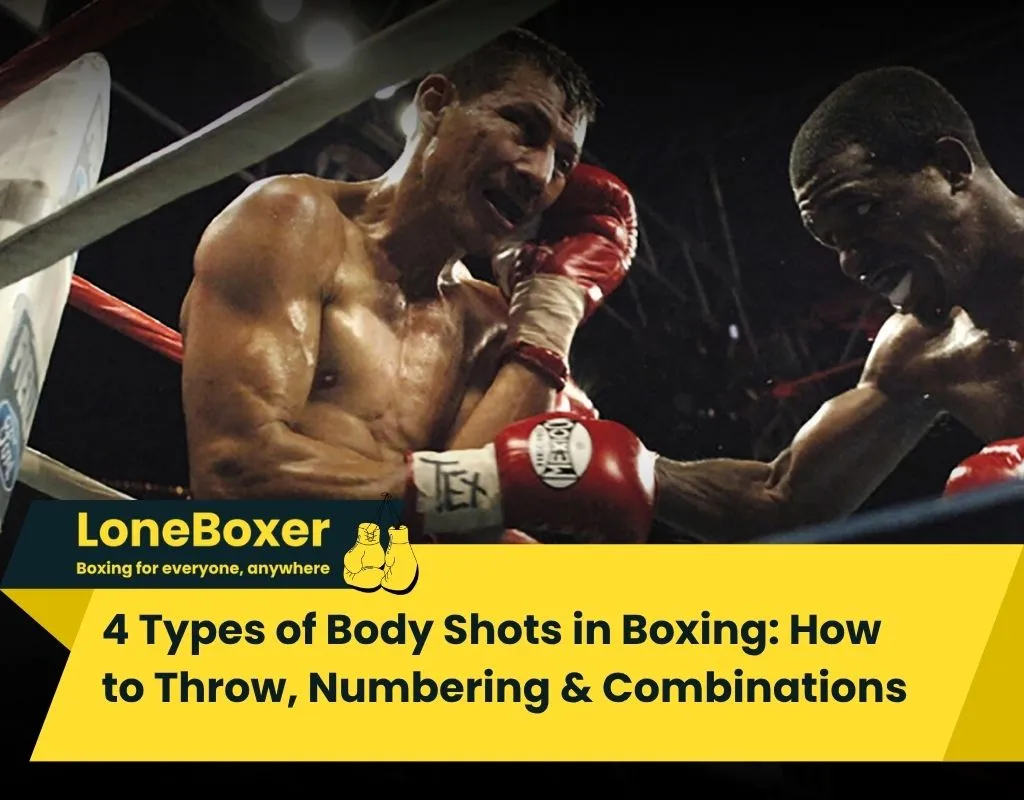
Body shots in boxing are strikes targeting the opponent’s torso to weaken their guard, reduce stamina, and force a knockout. Liver shots, punches to the solar plexus, and punches to the ribs are common body shot types. Each type can cause intense pain or even a KO by disrupting organ function or hindering breathing. Effective body shots require precision and can be delivered by creating openings in the opponent’s defense or when the opponent drops their guard. For easy recall, body shots are numbered during training, with a liver shot, often referred to as 3B. While landing shots to the body demands close-range combat, exposing a fighter to counterattacks, they can drain the opponent’s stamina and interrupt the adversary’s guard. Punches to the kidney (kidney shots) and rabbit punches (shots to the back of the head) are prohibited due to the high risk of organ damage. These rules are enforced by referees and boxing organizations.
- What are The Types of Body Shots in Boxing?
- What are the Types of Body Punches in Boxing?
- When to Throw Body Punches?
- Are Body Shots Effective?
- How are Body Punches Numbered?
- Can you get Knocked Out by a Body Shot?
- How to Take Body Shots?
- What are the Disadvantages of Body Shots?
- What are the Advantages of Body Shots?
- How to Increase Overall Punching Power?
- How to Increase the Accuracy of Your Body Shots?
- What Types of Body Punches Are Forbidden in Boxing?
- What are the Types of Punches in Boxing?
What are The Types of Body Shots in Boxing?
- Liver Shot: A liver shot targets the right side of the body, just below the rib cage. It’s a hook delivered with precision to disrupt the opponent’s organ function, causing intense pain and potentially a knockout.
- Solar Plexus Shot: This punch aims at the solar plexus, located just below the sternum. Its purpose is to knock the wind out of the opponent, impairing breathing and weakening their stance.
- Spleen shot: This punch targets the left side of the body, just below the rib cage. It’s aimed at disrupting organ function, causing intense pain and potential knockout. It is similar to the liver shot, though less commonly targeted.
- Floating Rib Shot: The floating rib shot targets the lower ribs, which are less protected. It’s designed to cause sharp pain and potential rib damage, hindering the opponent’s movement and breathing.
What are the Types of Body Punches in Boxing?
Body punches in boxing are strikes aimed at an opponent’s torso. They’re designed to weaken an adversary’s guard, slow their movement, or target vital areas to force a knockout. Common types include the hook to the liver, a blow that can incapacitate due to the liver’s sensitivity. Solar plexus strike, a punch to the central region of the torso that can disrupt breathing and cause intense pain. Rib shot targets the rib cage, potentially breaking ribs and reducing an opponent’s ability to breathe. Body punches are a strategic element in a boxer’s arsenal, used to create openings, cause damage, and gain a tactical advantage.
1. Jab to the Body
A jab to the body is a straight punch targeting an opponent’s torso. It’s used tactically for creating openings, disrupting rhythm, and setting up combinations. Moreover, it serves as a tool for gauging distance and can be employed defensively to maintain space between fighters.
To execute the punch accurately, begin by adopting a boxing stance, ensuring your feet are shoulder-width apart, and placing the non-dominant foot forward while maintaining a slight bend in the knees. Step slightly forward with the lead foot and extend the lead hand towards the opponent’s midsection. For optimal force transmission, rotate the fist during the punch’s delivery, ensuring the palm faces downward upon impact. Following the punch, retract the hand back to guard the face, maintaining readiness for incoming strikes or counterattacks.
Jab to the body typically targets the solar plexus or lower, including the ribs and abdomen. Thus, it can effectively sap an opponent’s energy and lower their guard as a fight or bout progresses.
2. Cross to the Body
The cross to the body is a straight punch aimed at the opponent’s torso. It’s used to penetrate defenses, counter an opponent’s attack, create openings for further strikes, or disrupt opponent’s rhythm. The punch targets the midsection, specifically the solar plexus or ribs, to weaken an opponent’s core and deplete their stamina.
To execute the punch correctly, bend from the knees slightly, rotate the rear foot, pivoting on the ball of the foot, while twisting the hips and transferring weight from the back leg to the front. The rear hand moves straight, aiming for the target area, with the arm fully extended at the moment of impact. The non-punching hand remains in a defensive position, guarding the face. The puncher’s chin tucks down, eyes on the target, and the body leans slightly forward to maximize reach and power. After the punch lands, the hand retracts quickly to the guard position to prepare for defense or follow-up strikes.
3. Lead Hook to the Body
The lead hook to the body is a punch aimed at an opponent’s torso, often used to lower their guard or counter their advances. This punch can create openings, force an opponent to drop their hands, and set up further combinations.
To execute the lead hook to the body, pivot the lead foot and rotate the torso while raising and bending the arm at a 90-degree angle, driving the fist into the target area, typically the liver or ribs. The rear hand remains at the guard position. After the punch lands, the hand is retracted to the guard position.
4. Rear Hook to the Body
The rear hook to the body is a powerful punch targeting an opponent’s spleen or lower ribs. It’s used to weaken an opponent’s core, create openings for further attacks, or counter when an adversary drops their guard.
To execute the rear hook to the body, bend at the knees slightly, pivot the back foot, and rotate the hips. At the same time, the rear arm, at a 90-degree angle, is used to deliver the shot. Keep your other hand guarding your face, and retract quickly after striking.
This punch can incapacitate the opponent if delivered precisely, as it targets the spleen of the opponent. A prime target due to its vulnerability to forceful impact.
5. Lead Uppercut to the Body
The lead uppercut to the body is a close-range punch thrown with the lead hand, arching vertically into the opponent’s torso. It’s primarily targeting the solar plexus or lower ribs, aiming to wind the opponent or cause liver damage.
To execute the lead hook to the body, perform a slight dip at the knees, pivot the lead foot, and rotate the hips to generate power. The lead hand snaps upwards with the palm facing yourself, fist aiming for the soft area beneath the rib cage. The elbow is kept close to the body to maintain defense. The lead hook is most effective after the weight has been transferred to the lead foot to generate power. For example, after slipping an opponent’s cross, the weight has been transferred to the lead foot, setting up the lead uppercut.
It’s used to penetrate guard, counter an opponent’s jab or cross, create openings for combinations, or disrupt an opponent’s rhythm. It can also be used to force the opponent to lower the guard, hence exposing their head for follow-up strikes.
6. Rear Uppercut to the Body
The Rear uppercut to the body is a close-range punch thrown with the rear hand, driving upward into the opponent’s torso. It’s employed to counter an opponent’s forward movement, exploit openings in their guard, distract for combination setups, or as a defensive maneuver to disrupt an aggressive rhythm. The punch aims to deliver a powerful blow to the body, potentially winding the opponent or causing them to drop their guard, thus creating opportunities for follow-up attacks.
To throw a rear uppercut to the body, bend slightly from the knees, pivot the back foot, rotate the hips, and drop the rear hand slightly before driving it upward with the force of your legs, keeping the elbow in. The lead hand remains guarding the face.
When to Throw Body Punches?
Throw body punches when an opponent drops their guard, during a clinch to create space, or once an opponent raises their guard to protect their head. It’s better to target the body when an adversary’s breath rhythm becomes predictable, thus disrupting their breathing and stamina. Moreover, body shots can be used for counter-punching if the opponent commits to a punch, leaving their torso exposed. Avoid telegraphing to prevent counterattacks.
Are Body Shots Effective?
In boxing, shots to the body are effective. Research indicates that blows to the torso can diminish an opponent’s stamina, disrupt breathing, and cause significant pain, leading to a lowered guard and increased vulnerability. They target areas sensitive to impact, such as the liver and solar plexus, potentially resulting in a knockout.
How are Body Punches Numbered?
Body punches are numbered based on a system designed for easy recall and execution during training and bouts:
| Punch Number | Description |
|---|---|
| 1B | Jab to the body |
| 2B | Cross to the body |
| 3B | Lead hook to the body |
| 4B | Rear hook to the body |
| 5B | Lead uppercut to the body |
| 6B | Rear uppercut to the body |
What are Body Shot Combinations?
Body shot combinations are strategic sequences of punches targeting an opponent’s torso. They’re designed to weaken an opponent’s guard, slow their movement, and drain stamina. Common combinations include the left hook to the liver (3B) followed by a right uppercut (6B) to the solar plexus. Another combination is a short lead hook to the head (3), followed by a lead hook to the liver (3B). Boxers use these combinations to create openings for additional attacks and deliver a knockout by targeting vulnerable areas such as the liver, stomach, and ribs. Effective body shot combinations require precision, timing, and power to disrupt opponents’ rhythm and inflict damage.
How to Set Up Body Shots?
To set up body shots, fighters use baiting techniques such as feints, movement patterns, and vulnerable positioning to lure opponents into throwing specific punches. For example, feinting punches to the head can make the opponent’s guard shift upwards. As their guard rises, the opening to the midsection can be used, targeting the liver, sternum, or ribs.
Can you get Knocked Out by a Body Shot?
Yes, you can get knocked out by a body shot. A precise punch to the liver, often called a “liver shot,” can incapacitate a fighter, leading to a knockout.
How Does Liver Shot Knock You Out?
A liver shot can cause a knockout due to the organ’s sensitivity and the body’s physiological response. The liver is located in the upper right quadrant of the abdomen and is rich in blood and nerve endings. When struck, the impact disrupts the organ’s functions and triggers an immediate autonomic nervous system reaction.
This reaction includes a sharp pain and an involuntary contraction of the diaphragm. Consequently, the diaphragm’s spasm hinders breathing, leading to a sudden drop in blood pressure and potentially causing an opponent to be unable to continue fighting. The vagus nerve, which runs near the liver, may be stimulated, intensifying the body’s shock response.
Scientific studies support the knockout effect of a liver shot by documenting the rapid decrease in blood pressure and the body’s pain response. Thus, a well-placed liver punch can incapacitate an opponent, illustrating the vulnerability of the human body even in well-conditioned athletes.
How to Take Body Shots?
To defend against body shots in boxing, tuck elbows close to the torso, rotate hips to absorb impact, and tighten core muscles. To endure more, improve pain tolerance through consistent sparring and targeted abdominal exercises. Footwork in boxing enables boxers to take body shots by positioning themselves optimally, evading incoming punches, and creating angles to minimize targeted areas. Conditioning for body shots involves strengthening the core, enhancing cardiovascular fitness, and practicing breathing techniques to mitigate pain and recover quickly from blows.
What are the Disadvantages of Body Shots?
Body shots expose fighters to counterattacks; lowering the guard to strike the torso can leave the head vulnerable. They also demand close range, increasing the risk of clinches or counterpunches. Moreover, body shots require precise technique and timing; inaccurate strikes can result in overextension, leading to imbalance and potential knockdowns. However, when executed correctly, they deplete an opponent’s stamina and can lead to knockouts.
What are the Advantages of Body Shots?
Body shots drain an opponent’s stamina, whereas head punches may not immediately impact energy levels. They reduce opponents’ mobility, while head strikes typically don’t. Body shots can cause opponents to drop their guard to protect their midsection, leaving their head more vulnerable to subsequent strikes. Body shots carry a lower risk of hand injury compared to head punches.
How to Increase Overall Punching Power?
To increase punching power, engage in plyometric exercises as they enhance explosive strength. Incorporate heavy bag workouts, focusing on striking power to build potency. Weight training, particularly compound movements, build the muscles used in punching. Most of all, perfecting the technique to punch harder and faster is most important.
How to Increase the Accuracy of Your Body Shots?
To improve the precision of punches, adopt varied punching drills into your training regimen. Focus on repetition, ensuring fluidity and agility while punching. Target specific areas and aim consistently. Train with a partner for realistic scenarios. Use a heavy bag to perfect technique and power. Incorporate shadowboxing, visualizing the opponent’s body.
What Types of Body Punches Are Forbidden in Boxing?
Illegal body punches in boxing include blows below the belt, kidney punches, and rabbit punches. The Marquess of Queensberry Rules, which govern professional boxing, explicitly prohibit these strikes. Hits to the back and the back of the head or neck (rabbit punches) are banned due to the high risk of serious injury. Evidence of these regulations is found in the official rulebooks of boxing organizations like the WBC, WBA, IBF, and WBO, which all adhere to similar standards for fighter safety. Referees enforce these rules during bouts, and infractions can result in point deductions, warnings, or disqualification.
What are the Types of Punches in Boxing?
In boxing, the main types of punches are the jab, cross, hook, and uppercut. The jab, a straight punch executed with the lead hand. The cross, a powerful straight punch executed with the rear hand. Hooks, executed with a semi-circular motion by either hand, target an opponent’s side or chin. Uppercuts, upward strikes with either hand, aim for the underside of an adversary’s chin or body.