
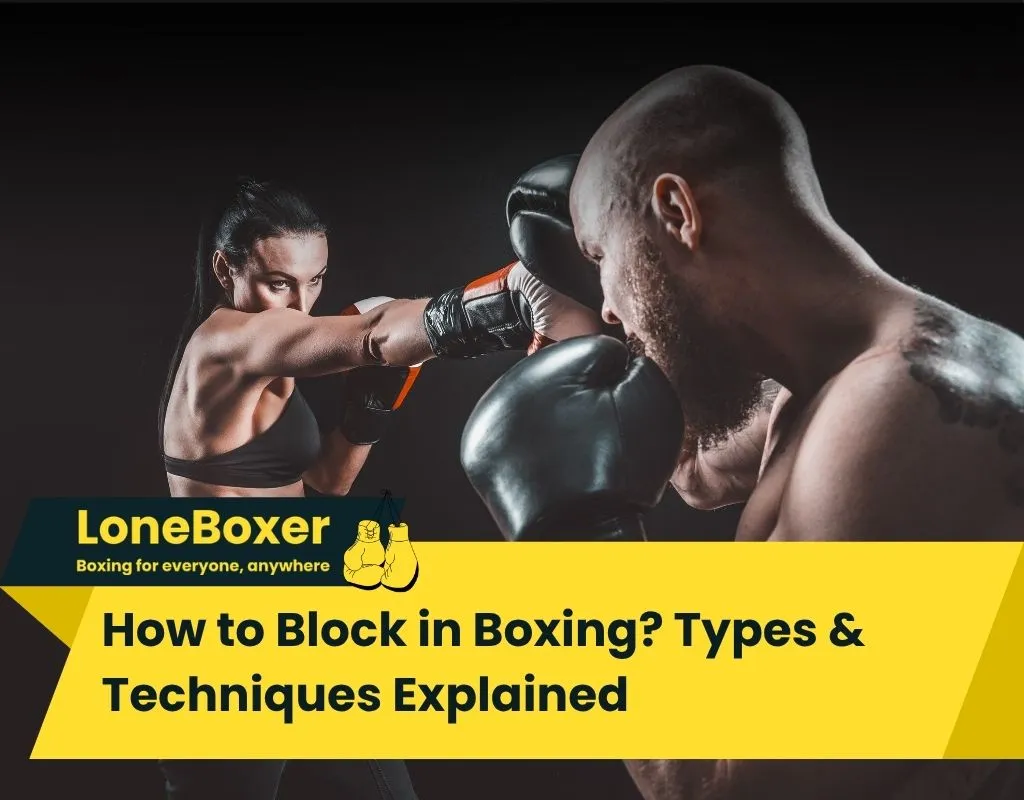
Blocking in boxing is a defensive technique categorized under the broader spectrum of boxing defense, distinct from head movement and footwork. It’s executed by allowing an opponent’s punches to land on specific parts of the defender’s body, such as the gloves, forearms, or elbows, rather than evading the strikes. Common blocking methods in boxing include cross-arm block, forearm block, elbow block, and catching punches. Each has potential drawbacks, like vulnerability to certain strikes and the risk of becoming predictable. Common guard-based defensive structures in boxing include the high guard, cross-arm guard, and the low guard.
1. Cross Arm Block
The cross arm block is a defensive technique in boxing that involves crossing the forearms in front of the face or body. To execute, a boxer aligns one forearm horizontally across the torso and the other forearm vertically, creating an “X” shape to absorb incoming blows.
Pros of the cross arm block include effective protection against straight punches and the ability to counter quickly. Cons include limited visibility and possible openings against certain angles if the guard is broken or used too predictably.
This block isn’t as popular due to its specific application and higher skill requirements. It’s considered an intermediate technique, not typically recommended for novices.
The cross-arm block could be used sparingly during bouts. It’s best employed against predictable straight punchers. However, overuse can lead to predictability and exploitation by versatile opponents. Thus, it’s essential to integrate it into a broader defensive strategy.
2. Elbow Block
The elbow block is a defensive technique where a fighter keeps the elbow tight against the torso to help block or smother incoming body shots. To execute effectively, the fighter tucks the forearm tight against the body, ensuring the elbow aligns with the incoming punch or strike.
Pros of the elbow block include strong protection against body shots when the guard stays compact and the ability to counter quickly after deflecting a strike. Cons involve potential exposure of the face if the block is not timed correctly and the risk of elbow injury from forceful impacts.
The elbow block is not as popular as more basic blocks due to its specificity and timing requirements. It’s considered an advanced technique, often utilized by experienced fighters.
Elbow blocks should be used sparingly in bouts. It’s effective for countering certain strikes but requires precision. Overuse can lead to predictability and vulnerability. Thus, it’s best employed as part of a varied defensive strategy.
3. Forearm Block
The forearm block is a defensive maneuver that utilizes the forearms to block or deflect incoming strikes. To execute effectively, one aligns the forearm horizontally across the body, ensuring the elbow isn’t hyperextended, and the hand isn’t too far from the face, maintaining a solid guard.
Pros include the block’s ability to absorb heavy blows and protect the head and torso. It’s also instinctive and quick to employ. However, cons involve potential exposure to follow-up punches if the block is misaligned, and it may leave the ribs vulnerable.
The forearm block is a staple in boxing, widely recognized for its simplicity and effectiveness. It’s not an advanced technique, but mastery requires practice to ensure timing and positioning are precise.
In bouts, the forearm block is advisable due to its versatility and protective qualities. It’s especially useful against aggressive opponents, allowing for quick transitions from defense to offense. However, reliance should be balanced with other defensive techniques to avoid predictability.
4. Catching a Punch
Catching a punch involves intercepting an opponent’s strike with an open glove, cushioning the blow. To execute correctly, align the glove with the incoming punch, using the palm to absorb the impact while maintaining a strong, stable stance.
Pros include reduced energy expenditure compared to other blocks and the ability to counter quickly. Cons involve the risk of misjudgment, leading to potential strikes slipping through defenses.
It is a common defensive action that can be effective when timed well, though it still requires precise timing and sharp reflexes.
In bouts, catching punches is advisable, as it conserves energy and sets up counterattacks. However, overreliance can lead to predictability, thus boxers should integrate it with varied defensive techniques.
What are the Common Blocking Mistakes in Boxing?
- Dropping hands – exposes the head, inviting knockouts. Boxers often lower their guard reflexively, especially when fatigued. To remedy this, fighters should consistently train to keep their hands up, developing muscle memory.
- Misjudging distance – compromises timing, resulting in blocks that are either premature or too late. This mistake allows opponents to land clean hits. Sparring with varied partners improves distance assessment and reaction timing.
- Incorrect stance – standing too square or with improper weight distribution, hinders mobility and effective blocking. A balanced stance enables quick defensive adjustments. Drills focusing on footwork and stance can correct this issue.
- Tension in the upper body – slows down a boxer’s response time. Relaxation during combat enhances speed and efficiency in blocking. Regular practice of staying loose, coupled with breathing exercises, can alleviate unnecessary tension.
- Overreacting to Feints: Boxers who react too strongly to feints may block unnecessarily, lose position, or open new targets. Staying calm and disciplined helps prevent this mistake.
What Boxing Blocking Drills to Do for Practice?
Boxing blocking drills enhance defensive skills and reaction time. Two effective ways to improve are the Mirror Drills and the Focus Mitt Drills.
- Mirror Drill:
- Boxers pair up, facing each other in their stances.
- One boxer throws a variety of punches (jabs, crosses, hooks) at a controlled pace.
- The other boxer practices defensive maneuvers with an emphasis on blocking and catching punches.
- Switch roles after a set time or several punches.
- This drill simulates real-time reactions to an opponent’s punches and improves defensive instincts.
- Focus Mitt Drill:
- A coach or training partner wears focus mitts.
- Boxers practice defensive maneuvers while the coach throws combinations on the mitts.
- Defensive techniques such as blocking, parrying, slipping, and rolling are employed to avoid or mitigate the impact of the punches.
- After each defensive move, boxers can counter with pre-determined strikes or combinations.
- This drill improves reaction time, defensive accuracy, and the ability to transition from defense to offense.
What are the Types of Boxing Guards?
Boxing features various guards, each serving a distinct purpose. The high guard, also known as the tight guard, involves raising the gloves to protect the face and head. The low guard positions the hands lower, often to improve vision, bait attacks, or set up counters, though it can leave the head more exposed if used poorly. The peek-a-boo guard, popularized by Cus D’Amato, keeps the gloves close to the cheeks for tight defense and quick head movement. The cross-armed guard, often associated with Archie Moore, uses a crossed-arm shell to protect the body and head. The Philly shell uses the lead shoulder to deflect punches while the rear hand protects the chin. Each guard offers different advantages, and boxers may switch between them depending on their style and opponent.
provides robust body protection. The Philly shell, which utilizes the lead shoulder to deflect punches, with the rear hand guarding the chin. Each guard offers strategic advantages, hence boxers often switch between them to adapt to their opponent’s tactics.
What’s the Difference Between a Block and a Parry?
A block absorbs or stops a punch on the gloves, forearms, or elbows, while a parry redirects the punch off its path. Blocks rely more on structure and positioning, while parries rely more on timing and precision. Both can be used to defend and set up counters, though parries often create cleaner immediate openings.
Is Parrying Better Than Blocking Punches?
Parrying isn’t necessarily better than blocking punches; it’s situational. Parrying offers counterattack opportunities but requires precise timing. Blocking provides a more defensive approach, reducing the chance of a counter but offering greater protection. Boxers often blend both techniques to adapt to their opponent’s strategy.
How to Counter After Defending a Punch?
Block a jab, and counter with a straight right. Duck a hook, and retaliate with an uppercut. Parry a cross, and respond with a hook. Slip a straight punch, counter with a jab-cross combo. Deflect an uppercut, counter with a cross or hook. Absorb a body shot and counter with an overhand. Each block and defense should transition smoothly into the counterattack, exploiting the opponent’s temporary vulnerability. Timing is critical; counter immediately after the block to capitalize on the opponent’s exposed defense. Practice drills enhance muscle memory, ensuring counters become second nature.
What Defense Moves Are Commonly Used in Boxing?
Common boxing defense moves include the slip, where a boxer dodges a punch by moving their head to the side; the bob and weave, involving bending at the knees and moving the head in a U-shape to evade blows; the parry, where fighters use their gloves to deflect incoming strikes; and the clinch, where a boxer grapples with their opponent to prevent further punches. Additionally, the pull-back or snapback is used to create distance and avoid a punch by leaning the upper body backward.