
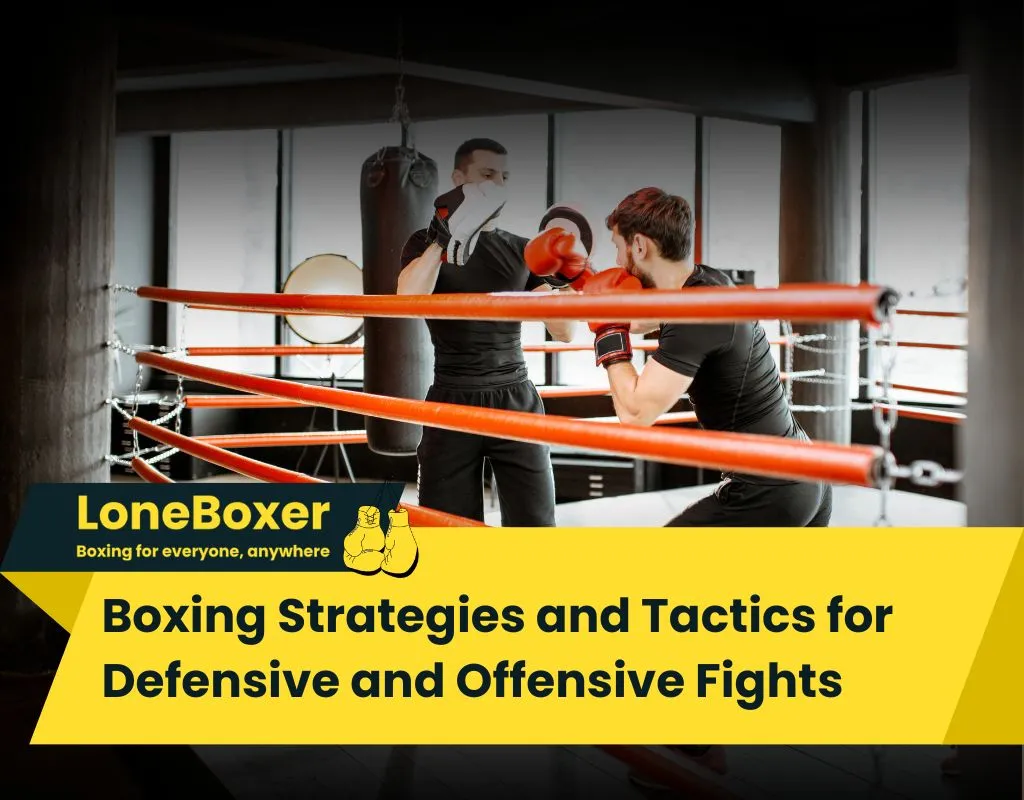
Boxing strategies are plans of action tailored to a fighter’s strengths and opponent’s weaknesses. Types of strategies include offensive strategies, focusing on pressure and volume punching; defensive strategies, emphasizing evasion and counterattacks; and adjustments based on the opponent’s style. It’s essential to adapt one’s approach by considering factors such as reach, aggression, power, and speed. Beginners should hone fundamentals, while all boxers must consider how stance and fighting style influence their strategy. Learning boxing, adaptation, and flexibility in strategy is key to boxing success.
How Can Opponents in Boxing Be Categorized in Terms of Strategy?
Boxing opponents can be categorized by strategy into several types:
- Taller fighters often utilize their reach advantage, jabbing from a distance to control the pace and keep opponents at bay.
- Shorter boxers typically work inside, using head movement and footwork to close the distance and unleash hooks and uppercuts.
- Southpaw fighters, with a left-handed stance, create awkward angles, often disrupting the rhythm of orthodox right-handed opponents.
- Orthodox boxers, right-handed, are more common, using a traditional stance that favors a strong right cross and left jab.
- Aggressive combatants press the action, constantly moving forward to overwhelm foes with volume punching and physicality.
- Defensive specialists prioritize evasion and counterpunching, capitalizing on opponents’ mistakes and preferring to fight off the back foot.
- Switch-hitters, adept at seamlessly transitioning between orthodox and southpaw stances, confuse opponents with their unpredictable attacks, capable of changing angles and strategies on the fly to keep their adversaries off balance.
What’s an Offensive Boxing Strategy?
An offensive boxing strategy is a fighter’s overall plan for landing punches, creating openings, controlling the pace, and breaking down an opponent’s defense.
It is bigger than just throwing hard punches. An offensive strategy combines things like:
- jab use
- combinations
- pressure
- feints
- angle creation
- body-head attacks
- countering after drawing a reaction
- controlling range and tempo
For example, one boxer may use a pressure-fighting strategy, walking an opponent down behind the jab and attacking the body. Another may use a counteroffensive strategy, drawing punches and firing back with sharp combinations. A longer-range boxer may build their offense around the jab, movement, and straight punches.
An offensive boxing strategy involves constant pressure, aiming to overwhelm the opponent with aggressive attacks. It prioritizes high-volume punching, cutting off the ring, and maintaining close proximity to reduce the adversary’s escape routes. This approach often employs combinations to penetrate defenses and seeks to dictate the fight’s pace. However, it requires excellent conditioning and awareness to avoid overextension and potential counterattacks.
What’s a Good Offensive Strategy?
A good offensive strategy depends on your and your opponent’s strengths and weaknesses. Some of the strategies that are good, depending on the opponent, are featured below.
- Against taller opponents, utilize head movement and footwork to close the distance, targeting the body to lower their guard, then aim for the head.
- Against shorter opponents, maintain distance with a strong jab and long-range punches, and exploit their reach disadvantage.
- Against southpaws, lead with right-hand punches, circle to your left away from their power hand, and use straight rights and left hooks.
- Against orthodox fighters, as a southpaw, exploit the angle with your left hand, circle to your right, and focus on straight lefts and right hooks.
- Against aggressive opponents, employ counter-punching, use their momentum against themselves, and maintain composure under pressure.
- Against defensive opponents, feint to draw reactions, increase punch output to open guard, and target vulnerable areas when they shell up.
What’s a Defensive Boxing Strategy?
A defensive boxing strategy is a fighter’s overall plan for avoiding clean punches while staying in position to control distance, create openings, and counterattack.
It is bigger than any one move. Instead of just blocking or slipping at random, a defensive strategy combines tools such as:
- guard position
- head movement
- footwork
- parrying and blocking
- clinching
- timing and range control
- counterpunching
For example, one boxer’s defensive strategy might be to use a high guard and tight footwork to stay safe, then counter after the opponent finishes punching. Another might rely on slips, shoulder rolls, and angles to make punches miss and answer immediately.
What’s a Good Defensive Strategy?
Some of the good defensive strategies, depending on the opponent, are featured below.
- Against taller opponents, utilize head movement, stay inside their reach, and target the body to lower their guard.
- Against shorter opponents, maintain distance, use the jab effectively, and capitalize on reach advantage.
- Against southpaws, lead with right-hand punches, circle to your left away from their power hand, and keep your lead foot outside their lead foot to maintain an advantageous angle.
- Against orthodox fighters, employ a strong jab, circle to your right, and exploit openings created by their lead left hand.
- Against aggressive opponents, maintain composure, use counter-punching, and implement clinching to disrupt their rhythm.
- Against defensive opponents, feint to draw reactions, increase punch volume to open guard, and target vulnerable areas when they present themselves.
How to Adjust Your Fighting Strategy Depending on the Opponent?
- Study Your Opponent: Before the fight, watch footage of your opponent if available. Look for patterns in their fighting style, strengths, weaknesses, and tendencies. This will give you valuable insight into how to approach the fight.
- Identify Weaknesses: Every fighter has weaknesses. Some may struggle with speed, while others may have difficulty defending against body shots or have poor footwork. Identify your opponent’s weaknesses and plan to exploit them during the fight.
- Play to Your Strengths: Assess your own strengths as a fighter and strategize how to use them effectively against your opponent. If you have fast hands, focus on combinations and quick strikes. If you have power, look for opportunities to land significant punches.
- Adjust Your Footwork: Footwork is essential in boxing, and adjusting your footwork based on your opponent can give you a significant advantage. If your opponent is aggressive, focus on maintaining distance and using angles to counter their attacks. If they are more defensive, work on cutting off the ring and applying pressure.
- Be Flexible: No fight goes exactly as planned, so be prepared to adjust your strategy on the fly. If your initial approach isn’t working, don’t be afraid to switch tactics mid-fight.
- Stay Calm and Focused: It’s easy to get caught up in the heat of the moment, but staying calm and focused is key to making smart decisions in the ring. Don’t let your emotions dictate your strategy; instead, stay composed and stick to your game plan.
- Listen to Your Corner: Your corner team can provide valuable advice and insights during the fight. Listen to their instructions and be willing to adapt based on their guidance.
- Protect Yourself: Regardless of your opponent’s style, always prioritize defense. Keep your hands up, move your head, and be prepared to block or evade incoming punches.
Can Boxing Strategy be Adjusted During Bouts?
Boxers can adapt their strategy mid-fight, responding to opponents’ tactics. They’ll assess rivals’ strengths and weaknesses, and adjust their approach accordingly. Effective adjustments may include altering stance, modifying defensive techniques, or switching from aggressive to more calculated offensive strategies. Hence, in-fight adaptability is crucial for success in the ring.
What’s a Good Beginner Boxing Strategy?
A solid beginner boxing strategy is to jab your way in, throw a basic combination, get back to position, and stay hard to hit. Focus on relying on the fundamentals like keeping a balanced stance, perfecting the jab, and maintaining a tight defense. Beginners should prioritize learning proper footwork to maneuver effectively around the ring. It’s crucial to develop a strong jab as it sets up combinations and keeps opponents at bay. Additionally, novices must practice keeping their guard up to protect against incoming punches. Regular sparring sessions under supervision help integrate these elements into a cohesive fighting approach.
How Does Fighting Style Affect the Strategy?
Fighting style affects strategy because strategy should fit how a boxer naturally attacks, defends, moves, and controls range. Style is how you fight, and strategy is how you plan to use that style to beat a specific opponent.
A boxer’s style shapes things like:
- What punches do they throw most
- What distance do they prefer
- How much pressure do they apply
- How they defend
- Whether they lead exchanges or wait to counter
Fighting style dictates strategy since boxers adapt tactics to exploit strengths and mitigate weaknesses. Changing one’s fighting style can surprise opponents, disrupt their rhythm, and exploit their vulnerabilities. An opponent’s style influences defensive and offensive approaches; a brawler faces a counter-puncher differently than a swarmer. Thus, understanding both personal and opposing fighting styles is crucial for strategic advantage in the ring.
How Does Boxing Stance Affect the Fighting Strategy?
Boxing stance influences defensive capabilities and offensive opportunities. A wider stance provides greater stability, thus enhancing defense against knockdowns. However, it may limit mobility, affecting the ability to advance or retreat quickly. Conversely, a narrower stance allows for swift movement, facilitating evasion and attack execution. Moreover, stance orientation, orthodox or southpaw, dictates the fighter’s angle of attack and defensive strategy, impacting the boxer’s ability to land punches and guard against an opponent’s strikes. Hence, stance selection is pivotal in tailoring a boxer’s fighting strategy to their strengths and weaknesses.
How to Learn Boxing at Home?
To learn boxing at home, start by mastering the basics such as stance and footwork. Watch instructional videos from reputable coaches for guidance. Practice shadowboxing to improve technique and form. Incorporate jump rope sessions to enhance footwork and cardio. Utilize a heavy bag for power training and combo drills. Perform bodyweight exercises like push-ups and squats to build strength. Review professional bouts to understand strategy and movement. Stay consistent with a structured training routine. Safety is paramount; use proper gear, including hand wraps and gloves, to prevent injury. Seek feedback from experienced boxers or coaches, even if it’s through online platforms. Stay motivated by setting clear goals and tracking progress.