
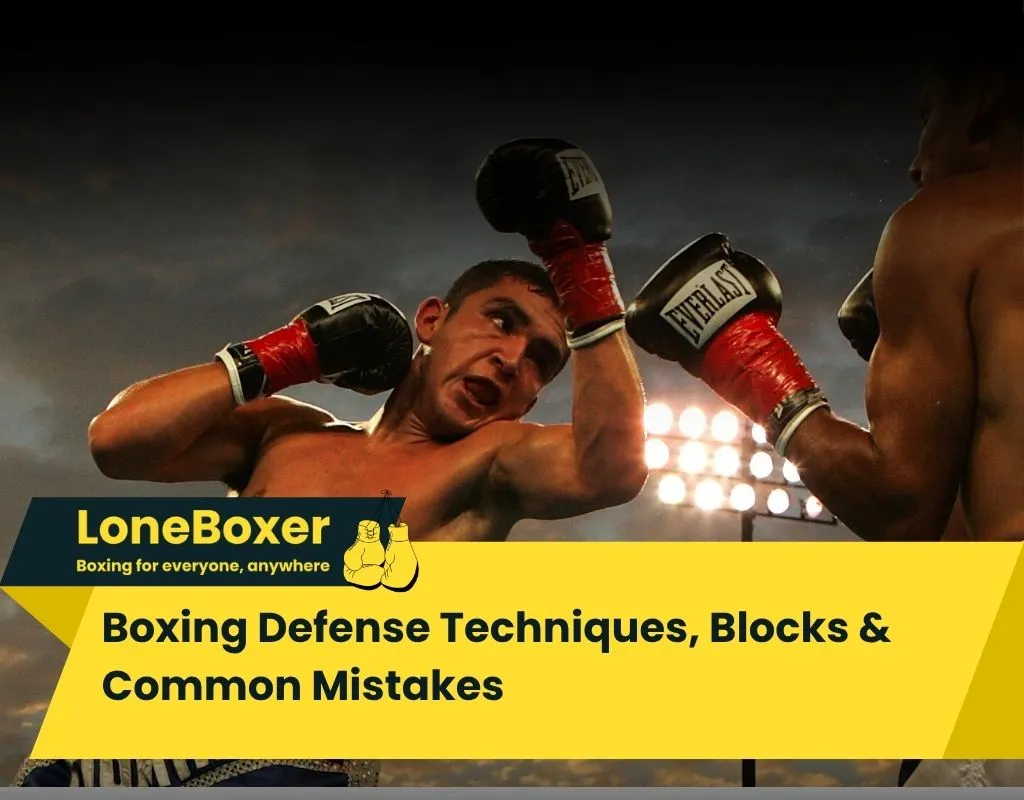
Defensive techniques in boxing refer to a variety of tactics and maneuvers fighters use to avoid or absorb opponents’ punches safely. Boxing defensive moves are categorized into several main groups, such as blocking, head movement, footwork, and parrying. Blocks in boxing are a fundamental defense skill that uses gloves, shoulders, and forearms to deflect or absorb punches to the head or the body. The most effective defense technique in boxing is the slip, which enables a boxer to dodge punches with minimal movement, saving energy and setting up counterattacks. A boxer’s personality shapes their defensive approach; a risk-averse fighter might prefer a cautious footwork strategy, while a confident counterpuncher may choose a bold parry and counter. The best defense is adaptive, blending fundamental boxing techniques with moves like the slip, shoulder roll, high guard, parry, and defensive countering to match the evolving dynamics of the bout.
How Many Boxing Defense Moves Are There?
There are approximately 22 defensive moves in Boxing. Defensive boxing techniques can be categorized into 4 main groups: Blocking techniques, defensive head movements, footwork, and parrying. Each main group contains between 2 and 8 defensive moves.
Blocking Techniques
Blocking techniques in boxing utilize gloves, forearms, and shoulders to deflect or absorb punches to minimize the risk of damage. The main benefit of blocking is the speed and straightforward approach to shield oneself from potentially dangerous blows. As a downside, even if the opponent fails to penetrate the blocks, the fighter’s block is still hit, thus only mitigating some of the potential damage.
1. High Guard
High guard involves raising gloves to protect the face and tucked elbows to shield the torso. It’s a fundamental defense against head strikes. Variations include the peek-a-boo, with gloves closer to the eyes for visibility. It’s solid for head defense, but it can leave the body exposed. A common mistake is over-tightening and limiting counter-attacks.
2. Low Guard
In low guard positions, the hands and elbows are lowered to defend against body shots. Low guard is less common as it exposes the head, but useful for baiting opponents. It’s carried out by keeping hands near the torso, ready to parry or counter. It’s risky for overall defense. Mistakes include dropping hands too low or misjudging distance. To improve, practice quick hand movement and maintain awareness of head exposure.
3. Cross Arm Guard
The cross arm guard uses one arm horizontally across the torso, the other supporting or covering. It’s effective for blocking straight punches to the body. Variations exist in arm positioning. It’s a sturdy option for body defense, but it can be penetrated by uppercuts. Errors often involve misalignment, leaving gaps where the punches can slip through. For better defense, ensure arms are snug against the body and adjust quickly to incoming strikes.
4. Elbow Block
Elbow blocks involve using the elbows to deflect incoming blows, especially hooks to the body. It’s executed by tucking the elbows in and rotating the torso. There are no significant variations. It’s excellent for protecting the ribs but may leave the face vulnerable. A typical mistake is insufficient rotation, leading to glancing blows. To enhance this technique, focus on timing and body movement to absorb impact efficiently.
5. Shoulder Roll
The shoulder roll uses the shoulder to deflect punches, with the arms tight to the body and the chin tucked. It’s a slick defensive move that can also set up counterattacks. The technique is carried out by rolling the shoulder toward the incoming punch. It’s great for defense when mastered, but challenging to learn. Errors include mistiming and over-rotating. Improvement comes with practice, focusing on rhythm and reaction speed.
6. Covering up
Covering up, or turtling, involves a tight high guard and tucked chin to weather a storm of punches. It’s a last-resort defense, effective momentarily, but can lead to passive fighting. The key mistake is becoming too static, which makes one an easy target. To improve, use covering up sparingly and always look for opportunities to counter or escape.
Defensive Head Movements
Head movements in boxing are used to evade incoming punches by using techniques such as slipping, bobbing and weaving, pulling back, and ducking. Correctly executed head movements are great because, by dodging opponents’ head shots successfully, you do not absorb any damage. As a downside, if executed poorly, you can directly move into the opponent’s punch, increasing the potential damage.
7. Slipping
Slipping is a defensive head movement in boxing, used to evade straight punches. Fighters slip to avoid an opponent’s blows and position themselves for a counterattack. The technique involves a slight rotation of the body and a shift of the head to the side. Slipping inside moves the head towards the inside of the incoming punch, setting up counter opportunities but risking exposure to the opponent’s other hand. Conversely, slipping outside moves the head away from the punch, offering greater safety but potentially less aggressive countering angles. Common errors include overcommitting and losing balance. To improve, boxers should practice timing, maintain a strong base, and use minimal movement.
8. Bob and Weave
Bobbing and weaving is a rhythmic lateral movement, dodging hooks and wide punches. Fighters bob by bending at the knees and weave by moving their head and upper body in a U-shaped pattern under punches. It’s effective for inside fighting and closing distance. However, it can be energy-consuming and may leave fighters vulnerable to uppercuts. Variations include the speed and depth of the bob and weave. To enhance technique, boxers should stay on the balls of their feet and keep their guard high.
9. Pullback
Pulling back, or leaning back, is a method where fighters evade punches by shifting their upper body away from the opponent. It’s useful for avoiding straight punches and requires good reflexes. The technique can create distance for counterattacks but may lead to loss of balance. There are no significant variations, but execution depends on the fighter’s agility. Common mistakes are overextending and leaving the body open to follow-up attacks. Fighters should focus on quick, controlled movements and immediate counter-striking to improve.
10. Ducking
Ducking involves bending at the knees and lowering the head to avoid high punches, especially hooks. Ducking is excellent for defense and setting up body shots, but can be risky if misjudged, because of its vulnerability to uppercuts. To avoid mistakes, boxers should keep their eyes on the opponent and not duck too low. Improvement tips include staying balanced, using the legs to power the movement, and keeping the guard tight.
Footwork and Distance Control
Defensive footwork with distance control is used to evade or retreat from incoming hits. High-level footwork is essential for effective defense and performing defensive tactics and feints. Using strategic footwork is crucial because it helps to dodge and avoid damage. As a downside, if executed poorly, you can directly move into the opponent’s punch, increasing the potential damage.
11. In and Out Movement
In-and-out movement enhances a boxer’s ability to strike and evade. Boxers dart forward to land blows, then swiftly retreat out of their opponent’s range. This tactic helps maintain optimal fighting distance, conserving energy and minimizing risk. It’s effective for hit-and-run strategies but can be predictable if overused. Proper execution involves quick, short steps with balance. Variations include changing rhythms to confuse the opponent. Common errors include overcommitting or poor timing. To improve, boxers should drill timing with a focus on foot speed and reaction drills.
12. Lateral Movement
Lateral movement allows fighters to traverse the ring side-to-side, creating angles and avoiding linear attacks. It’s used for ring control, making it harder for opponents to land punches. The method involves side-stepping with balance and coordination. Variations include quick shuffles or wider steps for different scenarios. It’s excellent for defense, allowing evasion without moving out of range. Mistakes often stem from crossing feet, which can lead to imbalance. Improvement comes from practicing side-step drills and maintaining a strong, stable base.
13. Circling
Circling enables fighters to navigate around opponents, maintaining a safe distance while looking for openings. It’s carried out by stepping around the opponent, often in the direction away from their power hand. This method is for creating and exploiting angles, keeping the opponent off-balance. It’s a defensive maneuver that can turn offensive with the right timing. Variations include changing the circling direction to confuse the opponent. A typical mistake is circling towards the power hand, increasing the risk of a powerful strike. To enhance circling, fighters should work on foot agility and spatial awareness.
14. Pivoting
Pivoting allows boxers to quickly change the direction of their movement, creating advantageous angles for attack or defense. It’s done by turning on the ball of one foot while the other steps to reposition. Pivoting is crucial for ring control, enabling fighters to reorient themselves relative to their opponent rapidly. It’s beneficial for both offense and defense. Variations include pivot depth and speed adjustments. Incorrect pivoting can leave a boxer off-balance or in a vulnerable position. Improvement tips include practicing pivot drills with an emphasis on balance and quickness.
15. Shifting:
Shifting is a crucial aspect of footwork used to control distance and angle in combat. It allows fighters to adjust their position relative to their opponent, enabling them to maintain optimal striking range and defensive posture. By shifting weight and stance, fighters can quickly close the distance to launch attacks or create space to evade incoming strikes. Proper shifting requires balance, coordination, and awareness of the opponent’s movements. Mistakes in shifting often result from overcommitting or telegraphing movements, leaving fighters vulnerable to counterattacks. Improvement comes through practicing shifting drills focused on fluid movement and maintaining defensive readiness.
16. Weaving:
Weaving is a defensive footwork technique employed to evade punches while maintaining distance control. By bending at the waist and moving the torso from side to side, fighters can slip past incoming strikes without compromising their positioning. Weaving allows fighters to make subtle adjustments to their head movement, making it challenging for opponents to land clean shots. It’s an effective method for maintaining distance while staying within striking range. Mistakes in weaving include excessive or erratic movements that can leave fighters off balance or out of position. Improvement comes through drills focused on coordinated head movement and maintaining defensive awareness while weaving.
17. Feinting:
Feinting with feet is a strategic technique used to manipulate distance and deceive opponents. By executing fake movements or attacks, fighters can elicit reactions from their opponents, creating openings for actual strikes. Feinting involves subtle footwork and body language to sell the illusion of an impending attack, forcing opponents to react defensively and create openings. It’s a valuable tool for controlling the pace of the fight and dictating the distance between fighters. Mistakes in feinting often stem from telegraphing or failing to capitalize on created openings. Improvement comes through practicing feinting sequences and developing the ability to read opponents’ reactions to adjust distance effectively.
18. Angling:
Angling is a tactical footwork technique used to create favorable positions and openings for attacks while maintaining distance control. By moving laterally or diagonally, fighters can disrupt their opponent’s line of sight and defensive posture, making it difficult for them to anticipate and defend against strikes. Angling allows fighters to control the distance between themselves and their opponent, setting up opportunities to strike or evade incoming attacks. Mistakes in angling often involve moving predictably or failing to capitalize on created openings. Improvement comes through drills focused on fluid lateral movement and recognizing opportunities to angle effectively while maintaining distance control.
19. Shuffling:
Shuffling is a foundational footwork technique employed to maintain balance, adjust positioning, and control distance in combat sports. By taking quick, short steps, fighters can stay mobile and responsive, ensuring they are always within striking range while maintaining defensive readiness. Shuffling is particularly useful for maintaining distance control, allowing fighters to evade attacks and create opportunities for counterattacks. Common mistakes in shuffling include losing balance or failing to maintain proper distance from the opponent. Improvement comes through practicing footwork drills focused on agility, coordination, and maintaining a strong, stable base while shuffling.
Parrying and Redirecting Punches
20. Jab Parry:
Jab parry deflects incoming jabs, typically with the rear hand, preserving the fighter’s position. It’s used to move the punch from its course and create counterattack opportunities. Pros include minimal energy use and maintaining a close guard. Cons involve timing reliance and potential for feints’ exploitation. Typically, a boxer uses the rear hand to deflect the opponent’s jab, redirecting it sideways. Variations include parrying inward or outward, each affecting the counter-strike angle. It’s effective for defense when executed correctly. Common mistakes include overcommitting, leading to balance loss. Improvement tip: practice with light, controlled movements to hone reflexes.
21. Cross Parry:
Cross parry counters straight punches from the opponent’s rear hand. It’s utilized for disrupting attacks by pushing away the punch from the center line and setting up counters. Pros include effective neutralization of powerful strikes and opening counter windows. Cons include a higher risk if mistimed, possibly exposing the boxer to follow-up punches. Execution typically involves using the lead hand to deflect the opponent’s cross. Variations can include a simultaneous counter with the rear hand. Typical errors comprise misjudging distance or timing, resulting in vulnerability. Improvement tip: drill with a partner to develop precise timing and spatial awareness.
Clinching to Avoid Punches as a Defense
Clinching involves a boxer grappling with their opponent to halt the fight’s momentum, often to avoid punches. Fighters use it defensively to disrupt an aggressor’s rhythm or recover from fatigue.
Pros of clinching include multiple strategic advantages for fighters. Firstly, it disrupts the opponent’s offensive momentum, creating opportunities to reset and strategize. Additionally, it provides a valuable breather, allowing boxers to catch their breath and regain focus during intense exchanges. Moreover, clinching can frustrate opponents, potentially leading them to make costly mistakes. Clinches can also be used to set up inside fighting or counterattacks, providing tactical openings. Controlling the pace of the fight is another benefit, giving boxers the opportunity to dictate the rhythm and tempo. However, excessive holding can lead to potential penalties during bouts.
Clinching in boxing, while effective for defense against heavy hitters, also has drawbacks. It limits offensive opportunities, relies on the referee’s discretion, can lead to psychological exhaustion, and becomes predictable with overuse.
A common mistake in clinching is improper arm placement, leading to vulnerability to body shots. To improve clinching, boxers should practice quick entry and exit strategies, maintain a strong base, and use head position to control the opponent’s posture. Thus, a well-executed clinch can be a strategic asset.
Correct Timing and Anticipation For Defense
Timing refers to the ability to execute defensive maneuvers at the right moment. Anticipation involves predicting an opponent’s moves. Correct timing and anticipation are crucial for boxing defense. They enable a fighter to evade or block attacks at the right time. To achieve correct timing, a boxer must observe the opponent’s patterns and strike rhythm. Anticipation requires studying an opponent’s behavior and tendencies. Both aspects are improved by experience and can be honed through various drills.
Mastering timing and anticipation helps minimize energy expenditure and create counter-attacking opportunities. However, over-reliance can lead to predictability. It is also common to misjudge an opponent’s speed and telegraph defensive moves. To improve, boxers should practice with varied partners and focus on reaction drills.
For example, in defense, correct timing might involve slipping a punch just before it lands. Anticipation could mean recognizing the setup for a hook and preparing to duck or counter.
What’s the Best Defense Technique in Boxing?
Determining the “best” defense technique in boxing is subjective and dependent on various factors such as the boxer’s style, opponent’s style, physical attributes, and situational context. However, certain techniques stand out for their effectiveness across various scenarios. Good footwork is paramount, enabling a boxer to control distance, angles, and pace while evading punches. Additionally, slipping punches effectively reduces the risk of getting hit flush, demanding precise timing and awareness. Blocking remains fundamental, safeguarding vulnerable areas like the head and body. Counterpunching, using defensive movements to set up potent counterattacks, can disrupt an opponent’s rhythm and deter aggression. Yet, the optimal defense often involves a blend of these techniques, tailored to the individual’s strengths, weaknesses, and fighting style. Continuous refinement through training and sparring is crucial for boxers to develop a well-rounded and formidable defensive arsenal in the ring, as well as the strategic knowledge needed.
How to Block Incoming Punches?
To block incoming punches, adopt a solid stance and keep your lead hand up near your face, with your elbow tucked in to protect the centerline. Your rear hand should be positioned near your chin or temple, ready to defend against punches from the opponent. Anticipate your opponent’s moves and react swiftly. Utilize various types of blocks, parries, and slips. It is also important to practice countering right after defending or deflecting a punch to keep the fight going and take advantage of the openings the opponent created.
How to Defend Against Body Shots?
To defend against body shots, tuck your elbows in close to your torso, thus shielding your ribs and liver. Keep your guard tight, especially when your opponent targets the midsection. Pivot or step to the side, making yourself a moving target that’s harder to hit. Right before the impact of a body shot, tense your abs to absorb the impact of the blow. This helps to minimize the damage to your midsection by providing additional support and protection. Practice these techniques at home with shadowboxing or using a heavy bag to improve your muscle memory and reaction time.
What is Defensive Countering?
Defensive countering in boxing is about seizing the opportunity presented by an opponent’s attack, defending, and then countering. By parrying or deflecting their strike, a boxer not only defends against the incoming blow but also sets themselves up for a quick counterattack while the opponent is momentarily off balance or exposed. It’s a skill that requires sharp reflexes, timing, and the ability to read your opponent’s movements effectively. Mastering this technique can give a fighter a significant advantage in the ring, turning defense into offense.
Can Parrying be Used for Defensive Countering?
By parrying punches effectively, a fighter not only defends against the attack but also strategically positions themselves to capitalize on openings from different angles. This allows them to launch counterattacks with greater effectiveness and surprise, as they can exploit the opponent’s vulnerabilities from unexpected directions. So, in addition to disrupting the opponent’s rhythm, parrying also enables fighters to create advantageous angles for their own offensive maneuvers, making it a multifaceted defensive technique in boxing.
What are Great Drills to Practice Defensive Countering?
Two key drills for honing defensive countering skills are: the slip and counter and catch and counter exercises. In the slip and counter drill, a boxer evades an incoming jab by swiftly moving to the side, then promptly launches a counter punch, such as a straight right. On the other hand, the catch and counter drill involves a fighter intercepting the opponent’s punch with their gloves, swiftly retaliating with a counter jab or cross. This exploits the opponent’s temporary vulnerability due to an exposed defense.
For defensive countering abilities, boxers can engage in reaction drills. These drills involve reacting to randomly thrown punches with defensive maneuvers, followed by immediate counters. Additionally, mirror drills are beneficial, where fighters simulate defensive movements and counterattacks in front of a mirror to refine technique and timing. By incorporating these drills into training regimens, athletes can enhance their defensive skills, timing, and capacity to capitalize on opponents’ openings during actual fights.
What are the Fundamentals of Boxing?
Boxing is a sport that requires years of practice to become proficient at it. Besides defensive techniques, fundamental aspects to learn include practising punching techniques, learning stances, improving breathing techniques, and studying footwork, among other skills. These individual fundamental skills are then honed through training that includes meticulous drilling and conditioning the body through boxing workouts.