
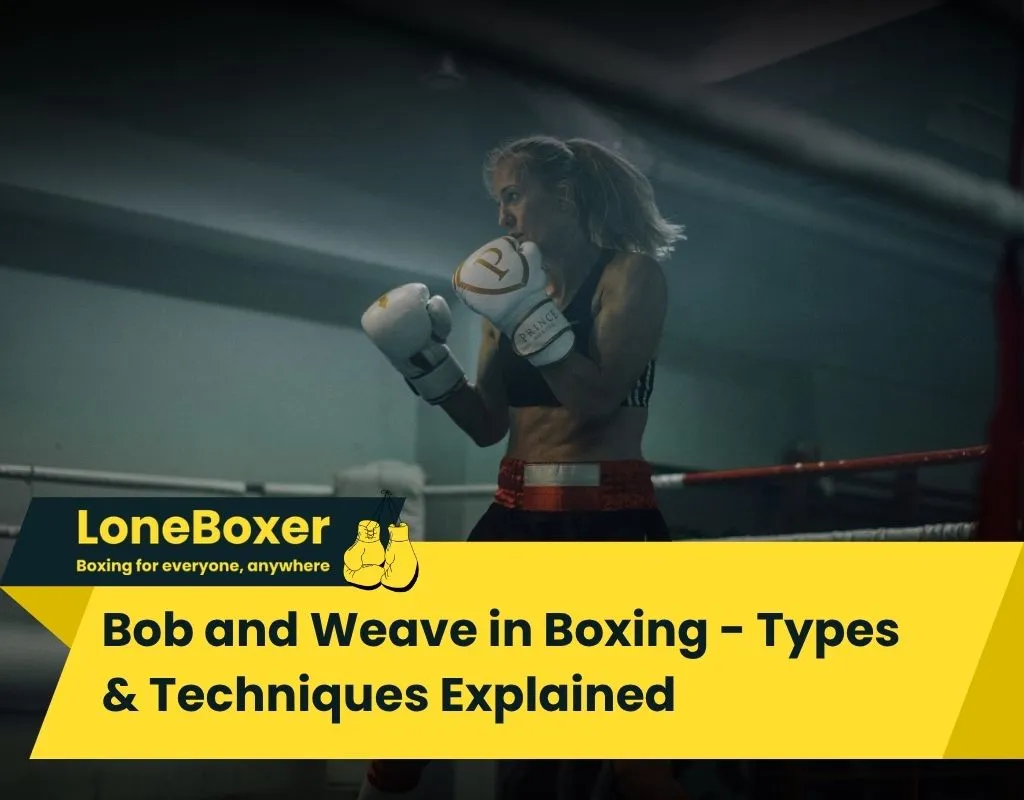
Bob and weave is a boxing technique in which a fighter moves their head and upper body in a U-shaped pattern to avoid punches, especially hooks and close-range combinations. Common variations include the classic bob and weave, the double bob and weave, the bob and weave with forward movement to close distance while avoiding punches, and the lateral bob and weave to create angles for counters. Each variation has its own defensive and offensive purpose, and mastering the technique takes practice, timing, and body control.
How to Bob and Weave Correctly?
- Assume a Stable Stance: Begin with your feet shoulder-width apart, knees slightly bent, and your dominant foot positioned slightly behind the other. This stance provides stability and mobility.
- Tuck Your Chin and Keep Your Guard Up: Protect your chin by tucking it down towards your chest while keeping your eyes on your opponent. Your hands should be up, guarding your face.
- Lean Forward Slightly: Distribute your weight evenly between both feet and lean forward slightly. This position allows you to move quickly in any direction.
- Initiate the Bob: When your opponent attacks, bend your knees to lower your body instead of bending at the waist. This maintains balance and stability.
- Move in a U-Shape: Picture your head moving in a smooth U-shaped path as you go under the punch and come up on the other side. The motion should be compact and controlled.
- Weave by Shifting Weight: Shift your weight from one leg to the other while moving laterally. This lateral movement helps you avoid incoming punches while staying in position to counterattack.
- Keep Your Hands Up: Throughout the bobbing and weaving motion, keep your hands up to protect your face and torso from strikes. Your guard should remain tight to defend against incoming attacks.
- Return to Stance Quickly: After evading an opponent’s strike, return to your initial stance as quickly as possible. This ensures that you’re ready to defend against follow-up attacks.
- Practice Rhythmically: Practice bobbing and weaving with a smooth rhythm and under control. Focus on fluid movement, balance, and staying in position.
What are the Types of Bob and Weave?
There are several common variations of the bob and weave in boxing, including the classic bob and weave, the double bob and weave, the bob and weave with forward movement, and the lateral bob and weave. They differ mainly in direction, rhythm, and tactical purpose.
- Classic Bob and Weave: In the classic version, the boxer dips under a punch and comes up on the other side in one smooth motion. It is commonly used to avoid hooks and return with a counter.
- Double Bob and Weave: This variation involves two consecutive weaving motions, usually to avoid follow-up punches in a combination. It can also help a boxer change rhythm and create a better countering angle.
- Bob and Weave with Forward Movement: In this version, the boxer weaves while stepping forward to close distance safely. It is useful for pressuring an opponent while avoiding punches on the way in.
- Lateral Bob and Weave: This variation combines weaving with side movement to create a new angle. It is useful for escaping the center line and setting up counters from the side.
What are Common Mistakes While Bobbing and Weaving?
- Excessive Lowering of the Head: Fighters sometimes dip too low, which hurts balance and reduces visibility. To avoid this, keep your eyes on your opponent’s chest and shoulders and make the movement only as deep as necessary.
- Neglecting Lateral Movement: Bobbing straight up and down makes patterns predictable. Integrate side-to-side head movement to create an elusive target.
- Stiff Legs: Rigid legs reduce mobility and speed, always stay on the balls of the feet, enabling quick, fluid motion.
- Overcommitting to Movements: Large, exaggerated motions waste energy and telegraph intentions. To improve, use short, sharp movements to remain efficient and unpredictable.
- Poor Timing: Incorrectly timed bobbing and weaving leaves fighters vulnerable. To improve timing, drill with a partner or shadowbox to improve rhythm and reaction time.
- Ignoring Defense: Focusing only on head movement can expose your body. Keep your hands up and your elbows in while moving.
- Inadequate Conditioning: Fatigue makes head movement slower and sloppier. Good conditioning helps you maintain form and reactions throughout a round.
What are Good Drills for Improving Bobbing and Weaving?
Good drills for improving bobbing and weaving include slip bag training and partner mitt drills. These drills help develop timing, rhythm, balance, and the ability to counter after making an opponent miss.
- Slip Bag Training:
Hang a slip bag or double-end bag at head height. Practice bobbing and weaving under the bag as it swings toward you. Focus on smooth, controlled movement and staying balanced throughout the drill. You can gradually increase the speed to challenge your reaction time and coordination. - Partner Mitt Drills:
One partner holds focus mitts while the other practices bobbing and weaving. The mitt holder throws controlled punches to the head and body, and the boxer moves under or around them while staying in position to counter. This drill improves defensive movement, accuracy, and the ability to respond after evading punches.
When to use Bob and Weave?
Use the bob and weave to avoid punches at close range, especially hooks and looping combinations. It is most effective when your opponent commits to a punch, and you want to create an angle for a counterattack. It can also help you move inside safely while staying in range to punch. However, it should not be overused, because predictable head movement can be timed by a skilled opponent.
Is Bobbing and Weaving a Good Defense Technique?
Bobbing and weaving is an effective defense technique in boxing, enhancing a fighter’s mobility and making them a harder target. It differs from slipping, which involves minimal head movement to evade punches. However, bobbing and weaving can be more unpredictable, potentially confusing opponents. Moreover, it requires greater physical conditioning due to its dynamic nature. Hence, while both methods serve to avoid strikes, bobbing and weaving offer a more active defensive posture compared to the more conservative slip.
What’s The Difference Between Slip and Weave?
A slip is a small head movement to one side to avoid a punch, usually a straight shot such as a jab or cross. A weave involves dipping under a punch and bringing the head out on the other side in a U-shaped motion. Slipping is a tighter lateral movement, while weaving uses more level change and body movement to avoid hooks and close-range attacks.
What’s the Difference Between Bobbing and Weaving vs. Slip and Roll?
- Bobbing and Weaving:
- Execution: Bobbing and weaving involves bending at the knees and hips in a rhythmic motion, creating a weaving movement to evade punches. Boxers move their entire upper body, shifting their weight up and down and side to side.
- Purpose: The primary purpose of bobbing and weaving is to make the boxer a moving target, making it more challenging for the opponent to land clean punches. It can also help the boxer maintain balance and positioning while evading attacks.
- Slip and Roll:
- Execution: Slipping involves moving the head slightly to either side to avoid straight punches. Rolling usually involves bending the knees and rotating the torso to move under a hook, although in some contexts it can also refer to the shoulder roll.
- Purpose: Slip-and-roll movements are usually tighter and more economical, allowing the boxer to stay close, avoid punches with less movement, and counter quickly.
What Other Defense Types Are There?
Boxing employs a diverse array of defensive moves such as slipping, bobbing and weaving, parrying or blocking, clinching, counter-punching, footwork, the pull-back method, and the shoulder roll. The variety of blocks and defensive techniques helps a boxer avoid clean punches, control distance, and create opportunities to counter. Mastering a variety of defensive skills is important because it allows a fighter to adapt to different opponents and situations in the ring.