
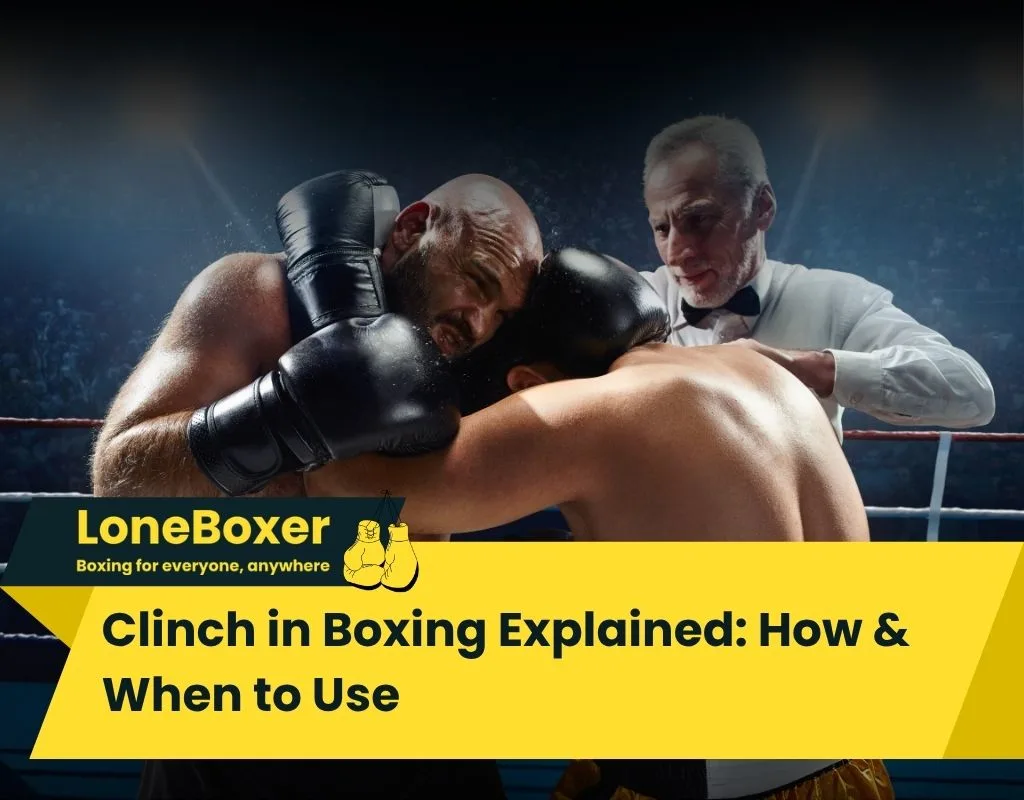
Clinching involves a fighter tying up an opponent at close range to slow the action, recover from fatigue, or avoid punches. It’s not part of head movement, blocking, or footwork, but a separate defense tactic in boxing. Fighters often employ clinching to disrupt an adversary’s rhythm or gain recovery when hurt. However, clinching is a regulated tactic to preserve fair competition and ensure bouts remain engaging. Excessive clinching may incur penalties, as it detracts from the bout’s action and can be perceived as avoiding the fight.
Why do Boxers Clinch during Fights?
Clinching, often referred to as “hugging” in the ring, allows fighters to momentarily catch their breath or prevent further onslaught from an aggressive adversary. It can be a defensive maneuver to close the distance, reducing the effectiveness of an opponent’s strikes. Referees typically break up clinches to maintain the flow of the bout.
Additionally, clinching can help position the boxer out of corners by clinching and changing the angles off the ropes. This strategic move not only buys time but also allows the boxer to reset and potentially create openings for counterattacks. By effectively utilizing clinches, fighters can dictate the pace of the match and assert control over their opponent’s movements, making it a crucial skill in the arsenal of any proficient boxer.
How to Clinch Properly?
Clinching effectively requires close body positioning and control. To clinch properly, a boxer closes distance safely, gets chest-to-chest or shoulder-to-shoulder, and ties up the opponent’s arms or shoulders to smother clean punches. For instance, in a defensive clinch, a fighter might step toward an aggressive opponent, tie up the opponent’s lead side, and limit their punching room until the referee calls for a break
When Should You Use Clinching?
Clinching serves various purposes in the sport. Different types of clinches and why they are used are listed below.
- Standard Clinch: This is the most common type of clinch in boxing. It occurs when one boxer wraps their arms around their opponent’s body or arms to neutralize their offense or prevent them from punching effectively. The boxer initiating the clinch may also use it to create separation or to buy time to recover if they’re hurt.
- Arm Clinch: Instead of grabbing the opponent’s body or head, a boxer may opt for an arm clinch, where they grab and control their opponent’s arms to restrict their punching ability or to set up their own punches.
- Clinch and Lean: This type of clinch involves a boxer wrapping their arms around their opponent and leaning their weight onto them. It’s a defensive tactic used to smother the opponent’s offense and tire them out.
- Clinch and Pivot: Boxers sometimes use the clinch as an opportunity to pivot and change angles, creating openings for counters or escapes while still maintaining control over their opponent.
- Clinch and Break: This occurs when a boxer initiates a clinch to disrupt their opponent’s rhythm or to nullify their offense momentarily, then quickly disengages to resume boxing at a distance.
- Clinch and Hold: Sometimes, a boxer may clinch and hold onto their opponent to stall the action, disrupt their opponent’s strategy, or wait for a referee break.
- Dirty Clinch: While not officially recognized as a type of clinch, some boxers may use the clinch as an opportunity to engage in illegal tactics such as hitting below the belt, hitting on the break, or using elbows, head, and shoulders to inflict damage.
When Should You Not Use Clinching?
Clinching should be avoided when it leads to excessive stalling, disrupts the flow of a boxing match, or when rules explicitly prohibit it. It’s also inadvisable if there is a possibility of exposing you to uppercuts or body shots from an opponent skilled in in-fighting or clinch work.
Why do Referees interrupt Clinching?
Clinching is permitted in boxing, but referees interrupt clinching to ensure fair play, maintain action, and enforce boxing rules. Clinching excessively can be a defensive tactic, hindering an opponent’s offensive opportunities. Thus, referees intervene to keep the match competitive and engaging for spectators. Persistent clinching without referee interruption could lead to a one-sided contest, where a fighter avoids combat rather than engages. Hence, intervention prevents stalling and encourages a cleaner, more decisive bout.
What Other Defence Techniques Can You Use in Boxing?
In boxing, you can use head movement to evade punches. Slipping, bobbing, and weaving let you dodge attacks. Blocking with gloves and arms absorbs impact. Parrying deflects incoming blows. Angle changes complicate your opponent’s targeting. Body positioning, such as side-on stances, reduces the targetable area. Thus, a boxer’s defense isn’t limited to mere guard but involves a dynamic combination of techniques.
What are the Rules of Clinching?
In boxing, clinching frequency isn’t limited by a specific number, but excessive clinching can lead to warnings from the referee. The duration of a clinch typically lasts until the referee intervenes, which usually occurs within a few seconds. Fighters don’t automatically lose points for clinching; however, points may be deducted for persistent excessive clinching if it’s deemed as a tactic to avoid fighting.