
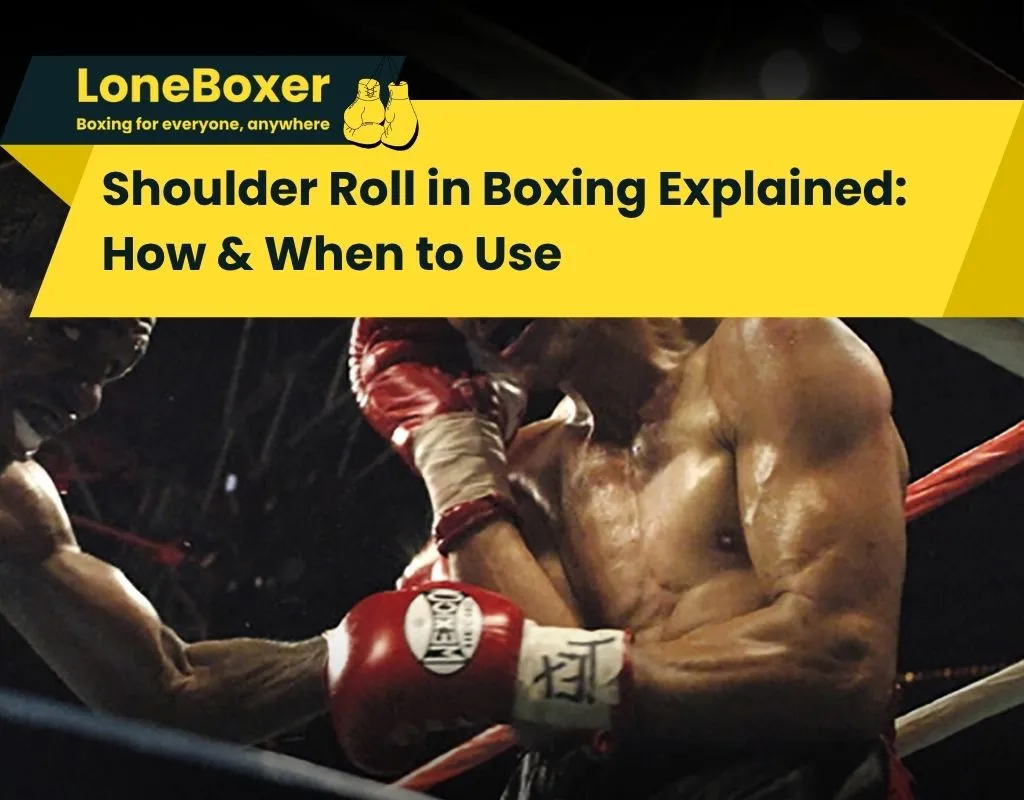
The shoulder roll is a defensive boxing technique often associated with the Philly shell guard. It uses shoulder positioning, body angle, and timing to deflect punches, reduce the target area, and create counterpunching opportunities. This move is particularly adept at neutralizing straight punches like jabs and crosses. Boxers like Floyd Mayweather have demonstrated the shoulder roll’s effectiveness at an elite level, especially when combined with sharp reflexes and strategic footwork.
How to Shoulder Roll?
To shoulder roll, tuck your chin, rotate your shoulder towards the incoming punch, and deflect it by leaning slightly and letting it glance off the shoulder. Simultaneously, make a small turn through the hips and torso while staying balanced. You can also pivot on your back foot, allowing your front foot to adjust its position while maintaining balance and readiness to counterattack. Thus, you blend evasion with positioning, readying for a strategic follow-up.
The process of shoulder rolling is further explained below.
- Tuck Your Chin: Protecting your chin is crucial in boxing to avoid getting knocked out. By tucking your chin down towards your chest, you create a barrier against incoming punches.
- Rotate Your Shoulder Towards the Incoming Punch: As your opponent throws a punch, you rotate your shoulder towards it. This action helps to present a smaller target area and allows your shoulder to absorb some of the impact.
- Deflect the Punch by Leaning Back Slightly: By leaning back slightly, you evade the punch and lessen its impact. This movement also helps to maintain your balance and positioning.
- Pivot on Your Back Foot: Simultaneously, pivot on your back foot to facilitate evasion and create space between you and your opponent. This movement adds fluidity to your defensive motion.
- Allow Your Front Foot to Adjust Position: Your front foot may need to adjust its position slightly to maintain balance and readiness for any follow-up actions.
- Maintain Balance and Readiness to Counterattack: Throughout the shoulder roll, it’s essential to stay balanced and ready to counterattack. By staying on your toes and keeping your weight centered, you’re prepared to capitalize on openings created by your defensive maneuver.
- Practice Shifting Weight: To enhance mobility and create angles for counterpunches, practice shifting your weight from one foot to the other during the roll. This dynamic movement allows you to adapt to different situations and maintain control of the fight.
When to Use a Shoulder Roll?
Below are some of the scenarios in which fighters use the shoulder roll.
- Anticipating Straight Shots: Boxers often use the shoulder roll when they anticipate their opponent throwing straight punches, such as jabs or crosses. By slightly turning their body and angling their lead shoulder towards the incoming punch, they can deflect it with their shoulder, minimizing the impact.
- Creating Angles: The shoulder roll also allows boxers to create angles against their opponent’s dominant hand. By rolling the shoulder and turning the body slightly, they can evade punches and position themselves to launch counterattacks from different angles.
- Close-Range Combat: The shoulder roll is most effective in close-range combat situations where the boxer can effectively use their shoulder to deflect punches and immediately counter with punches of their own. It allows for quick, fluid movement and counterpunching opportunities.
While effective against straight punches and in close-range combat, the shoulder roll may be less suitable against opponents who utilize aggressive volume punching or have strong hooks. It requires precise timing and positioning, which can be challenging against such opponents.
Like many boxing techniques, mastering the shoulder roll requires a certain level of skill and experience. Experienced fighters are often better able to time their shoulder rolls effectively and capitalize on counterattacking opportunities.
When not to Use Shoulder Roll?
Don’t use the shoulder roll when facing an opponent with a strong overhand right or left hook, as it exposes the chin. Against aggressive punchers with high volume, the shoulder roll’s effectiveness diminishes, as it’s designed for timing and countering rather than withstanding barrages. It’s also less effective when cornered or against the ropes, where movement is limited, and the ability to control distance is compromised.
How to Counterattack from a Shoulder Roll?
To counter-attack from a shoulder roll, swiftly pivot and throw a counter-cross as the opponent’s punch glances off. Example 1: Floyd Mayweather often employs a shoulder roll followed by a sharp right hand, exploiting his opponent’s exposed side. Example 2: James Toney, a master of defense, would shoulder roll against incoming jabs and retaliate with a quick uppercut or hook, capitalizing on the created opening.
How to Practice Shoulder Roll?
To practice the shoulder roll, begin by standing in a boxing stance. Tuck your chin, keep your back hand up, and lead hand covering the body, and relax your shoulders. As a punch comes in, pivot on your back foot, rotate your front shoulder up, shielding your chin, and turn slightly towards the incoming blow, and let it glance off your shoulder. Incorporate drills like the mirror drill, where you shoulder roll against your reflection, ensuring your form is correct. Add the shoulder roll exercise into shadowboxing, focusing on timing and fluidity. Gradually, spar with a partner, using the shoulder roll to deflect their jabs and crosses, honing your reflexes and technique.
What are the Common Mistakes With Shoulder Roll?
Boxers often misjudge timing, executing the shoulder roll too early or too late, leading to vulnerability. They may also over-rely on the move, becoming predictable. Incorrect posture, with a stiff back or low hands, compromises defense. Limited head movement restricts evasion effectiveness. Neglecting footwork results in poor balance and positioning. Hence, mastery requires precise timing, varied strategy, proper stance, active head movement, and dynamic footwork.
Is Shoulder Roll a Good Defence Technique?
The shoulder roll is an effective defensive technique in boxing, especially against straight punches. However, it requires precise timing and skilled footwork to execute properly. Moreover, it’s less effective against aggressive volume punchers or fighters with excellent hook punches. Hence, while the shoulder roll can be a valuable part of a boxer’s defensive arsenal, it’s not universally applicable and must be adapted to the opponent’s style.
What are other Types of Defence Techniques in Boxing?
Boxing uses a range of defensive techniques beyond the shoulder roll. These include the high guard, slipping, bobbing and weaving, parrying, blocking, clinching, and pull-backs, among others. Together, these defensive moves help boxers avoid clean shots, control distance, and create counterattacking opportunities.