
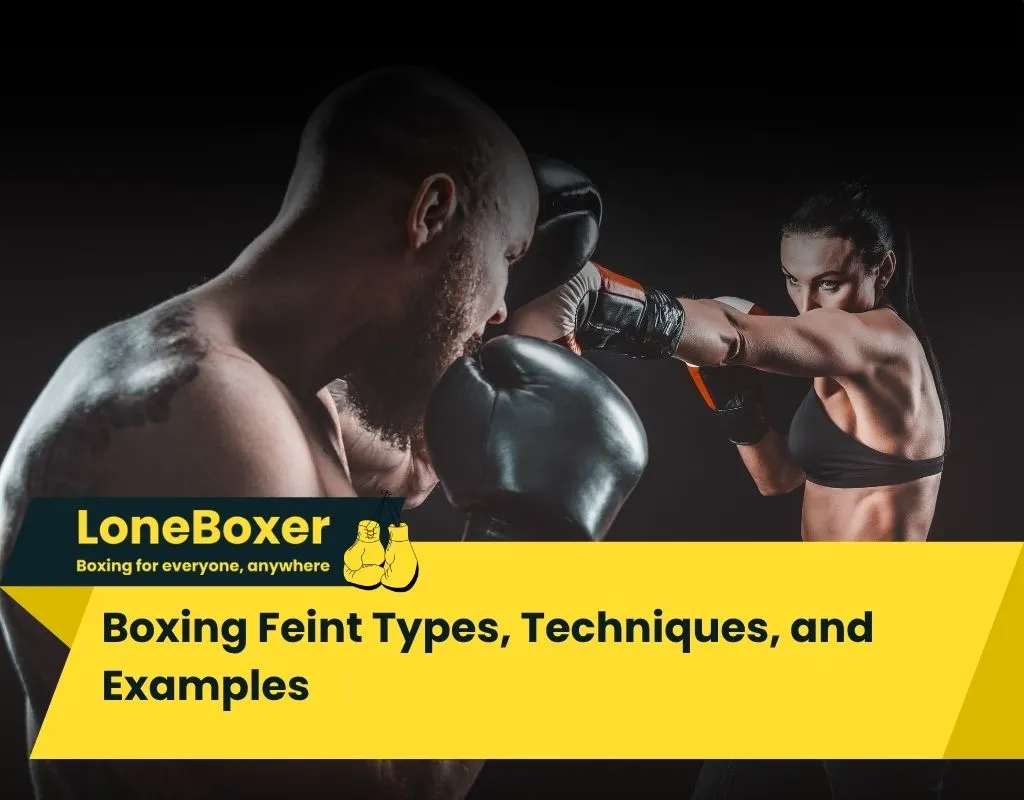
A feint in boxing refers to executing a deceptive move to open up an opponent’s defense. Feinting often involves mimicking punches to bait reactions, creating openings for actual strikes. It’s a strategic tool to deceive and gain an edge. Types of feints include visual, like body movements to deceive; footwork, using deceptive steps to create panic; and timing/rhythm, to disrupt the fight’s cadence.
What’s the Purpose of Feinting in Boxing?
Feinting in boxing serves to deceive opponents. Boxers mimic real punches to bait adversaries into reacting. These feints distract the opposition, creating openings for actual strikes. Thus, feinting is a strategic tool to gain a tactical advantage.
Feints can fluster their opponents into overreacting or lull them into a false sense of security, leading to underreactions. These manipulations blur the lines between reality and illusion, leaving adversaries guessing at every turn. In the ring, a well-timed feint can be a tool to set up a potent knockout punch or disrupt an opponent’s rhythm and confidence in an instant.
What are the Types of Feints in Boxing?
Boxing feints can be categorized into three main categories: visual, footwork, and timing and rhythm feints. Visual feints involve subtle or exaggerated body movements to mislead an opponent. Footwork feints utilize deceptive steps or shifts in stance. Timing and rhythm feints break the established combat cadence.
The following list will cover the nuances of each feint type, exploring their strategic applications and variations.
1. Jab Feints
Jab feint, a deceptive maneuver, falls under glove or hand feint techniques. It’s executed by simulating a jab to mislead the opponent. For instance, a boxer might feint a jab towards the face to draw the opponent’s guard up, then target the body. Alternatively, the feint could trigger a premature reaction, creating an opening for a straight right. Floyd Mayweather Jr. frequently utilized jab feints, outsmarting adversaries with his cunning and precision.
2. Foot Feints
Foot feints fall under the category of lower-body feint techniques. A stutter step feint, for instance, involves a boxer taking a quick, misleading step to confuse the opponent about their intended movement. During a match, a boxer might perform a stutter step feint to suggest a forward advance, prompting their opponent to brace for an attack, only to circle out and attack from a different angle. Alternatively, a fighter could use a stutter step feint to fake a retreat, making the opponent pursue and overcommit, leaving them vulnerable to a counter-strike. Vasyl Lomachenko, renowned for his footwork, frequently employs foot feints, including the stutter step, to outmaneuver opponents and create scoring opportunities.
3. Eye Feints
Eye feints fall under the category of psychological or strategic feints. They involve a boxer using their gaze to mislead an opponent about their next move. For instance, a fighter might look towards the opponent’s body to suggest a body shot, only to strike at the head instead. Similarly, a boxer could fix their eyes on the opponent’s left, indicating a left hook, before swiftly executing a right cross. Muhammad Ali, known for his exceptional ring craft, often used eye feints to confuse adversaries. He’d stare down at his opponent’s feet, suggesting a lack of engagement, then suddenly launch a flurry of head shots as the opponent lowered their guard.
4. Shoulder Feints
Shoulder feints fall under the category of body feints. They involve subtle, deceptive movements of the shoulder to mislead an opponent about the direction or timing of an impending strike. During a match, a boxer might dip their left shoulder slightly, suggesting a left hook is coming, only to throw a straight right hand as the opponent braces for the wrong punch. Floyd Mayweather Jr. is renowned for his mastery of shoulder feints, often using them to set up precise counterpunches, making him one of the most elusive and defensively skilled boxers in the sport’s history.
5. Hip Feints
Hip feints fall under the category of body feints. They involve subtle movements of the hips to mislead an opponent into expecting a punch or movement that isn’t coming. During a match, a boxer might execute a hip feint by rotating their hips slightly as if to launch a left hook. The opponent, anticipating the hook, raises their guard, leaving their body exposed for a straight right. Vasyl Lomachenko is renowned for his use of hip feints, often employing them to create openings and disorient his adversaries in the ring. His mastery of this technique showcases the effectiveness of body feints in high-level boxing.
6. Pause Feints
Pause feints fall under the category of timing feints. They involve a deliberate hesitation to disrupt an opponent’s rhythm and provoke a premature reaction. A boxer might initiate a forward movement, pausing momentarily to draw the opponent’s guard up, then attacking the now-exposed body. During a combination, a fighter could briefly stop their assault, causing the adversary to anticipate a counter, only to resume the offensive with an unexpected punch. Floyd Mayweather Jr. uses pause feints, often employing them to create openings and outmaneuver opponents.
7. Double Attack Feints
Double attack feint falls under the category of combination feints. It’s used to indicate a false offensive move to get the opponent to react defensively, and then quickly follow up with a genuine attack. In a fight, a boxer feints a left jab towards the opponent’s face, causing the opponent to raise their guard, and then swiftly delivers a right cross to the body, exploiting the opponent’s high guard. Vasyl Lomachenko used double attack feints, often confounding his rivals with his deceptive maneuvers before landing precise shots.
8. Verbal Feints
Verbal feints fall under the category of mental or strategic feints. They’re employed to mislead or unsettle an opponent outside of physical combat. For instance, a boxer might publicly downplay their own skills to lull an opponent into overconfidence. Alternatively, a fighter might praise the opponent’s lesser-known strength, causing the opponent to over-reliance on that aspect and become predictable. Muhammad Ali was masterful with verbal feints, often using witty trash talk and bold predictions to confuse and intimidate his rivals before stepping into the ring.
9. Breathing Feints
Breathing feints fall under the category of physiological feints. They involve a sharp exhale to mimic the sound of throwing a punch, deceiving the opponent. For instance, a boxer might sharply exhale while twitching their shoulder, suggesting a jab is coming, prompting the opponent to react defensively. Similarly, during a combination, a fighter might use a sharp exhale without throwing a punch, causing the adversary to flinch or cover up, creating openings for actual strikes. Floyd Mayweather Jr. is renowned for using breathing feints. He’d exhale sharply, tricking opponents into anticipating a punch, then capitalize on their premature defensive moves.
10. Head Movement Feint
Head movement feints fall under the category of body feints. It involves subtle shifts of the head to mislead an opponent about the intended direction of an attack or to provoke a reaction. During a match, a boxer might snap their head to the left, suggesting a move in that direction, only to strike with a right cross as the opponent’s guard shifts. Mike Tyson, renowned for his evasive maneuvers and offensive prowess, frequently used head movement feints to set up powerful punches and dismantle his adversaries’ defenses.
11. Level Changes Feint
Level change feints are in the category of body feints. It involves deceptive alterations in punching height to confuse the opponent. For instance, a boxer may initiate a motion indicating an impending body shot, causing the opponent to lower their guard to protect against the perceived threat. Seizing this opportunity, the boxer swiftly redirects the strike towards the head, catching the opponent off guard. Alternatively, a fighter could feint a high-level attack, causing the opponent to raise their guard, before quickly shifting their stance and delivering a blow to the body.
What Feints are Most Effective in Boxing?
Jab feints are most effective in boxing due to their simplicity and versatility. They create openings by causing opponents to react defensively. Feint combinations, such as jab-to-body (1B) followed by a cross to the head (2), exploit these openings, thus increasing the chance of landing strikes. However, the effectiveness of feints relies on a boxer’s ability to sell the fake and their timing. Hence, constant and effective practice is important to improve feint execution.
What’s a Good Feint?
A good feint in boxing is a quick, subtle, and convincing move to elicit an opponent’s response. A boxer’s hands, eyes, head, or shoulders might initiate the feint, but it’s the footwork and body language that sell it. Effective feints require minimal energy expenditure but yield high tactical advantage.
What’s a Bad Feint?
When a feint lacks conviction or is mistimed, it can telegraph your intentions to your opponent, allowing them to anticipate your next move and potentially launch a counterattack. This vulnerability underscores the importance of not only mastering feinting techniques but also ensuring they are executed with precision and confidence to minimize the risk of leaving yourself open to your opponent’s attacks.
How to Feint Better in Boxing?
To feint effectively in boxing, practice timing and body language. Drill sudden, minimal movements to mislead opponents. Practice shoulder twitches and foot feints to create tension in the opponent. Combine feints with actual strikes to establish unpredictability. Train with a partner to refine deceptive techniques.
What Drills to do To Practice Feints?
To practice feints in boxing, incorporate the following drills:
- Exaggerated Shadowboxing: Practice shadowboxing with exaggerated shoulder and hip movements to simulate feints. Focus on executing feints with conviction and emphasis on body language to deceive your imaginary opponent effectively.
- Partner Feinting Drills: Work with a partner where one of you acts as the feinter while the other reacts. This helps sharpen your ability to execute and read feints, enhancing your deception and defensive skills simultaneously.
- Feints and Combinations on the Heavy Bag: Incorporate feints into your heavy bag workouts before throwing combinations. Such drills mirror real fight scenarios, allowing you to practice setting up strikes with feints and delivering decisive punches.
- Precision Training with the Double-End Bag: Utilize the double-end bag to practice quick feints and precise strikes. Focus on timing your feints to land punches accurately on the moving target.
- Feinting Strategies in Sparring: During sparring sessions, prioritize using feints to set up punches and create openings against your opponent. Engage in controlled bouts where you can experiment with different feinting techniques, gradually improving your ability to deceive and outmaneuver opponents in live combat.
How to Deal With Opponents’ Feinting Techniques?
There are various strategies and boxing-specific tips to become more resilient against opponents’ feints: Recognize patterns in your opponent’s feints; they’ll often repeat. Stay relaxed, and conserve energy, don’t overreact; instead, use subtle movements to respond. Control distance; maintain a range where you can react effectively. Focus on your opponent’s torso; it’s less likely to feint than limbs. Develop a solid defense; it’ll reduce the effectiveness of their feints. Stay mentally sharp; anticipate strategy and adapt quickly.
