
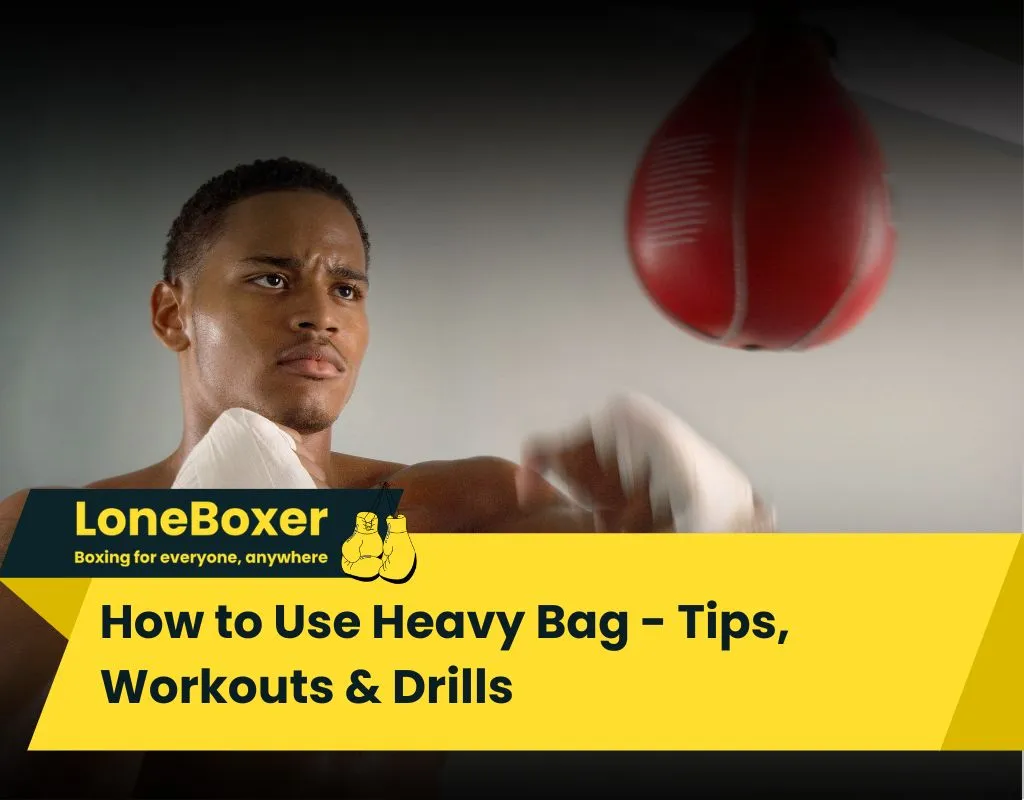
A speed bag, a small, air-filled bag anchored at the top to rebound quickly, is a type of punching bag for boxers to refine timing, rhythm, hand-eye coordination, and increase shoulder endurance. Proper technique, involving a square stance, consistent rhythm, and light strikes, is key to maximizing the bag’s benefits, notably the enhancement of punching speed.
What’s The Correct Way to Punch a Speed Bag?
To punch a speed bag correctly, stand square or in a balanced stance in front of the bag, keep your hands around chin to eye level, and strike the bag with controlled, compact motions. The contact should be light and rhythmic, using the front or side of the fist without overhitting. Focus on timing and consistency, allowing the bag to rebound in rhythm before the next strike. As your coordination improves, you can increase your speed while still staying relaxed and in control.
The main points on how to correctly utilize the speed bag are listed below.
1. Get Into Proper Stance
The proper stance for speed bag work is a balanced, upright stance with your feet about shoulder-width apart, knees slightly bent, core engaged, and weight centered. Depending on the drill, you may stand square or in a light boxing stance, but you should always stay relaxed and balanced. Stand close enough that your hands can reach the bag comfortably at about chin to eye level without overreaching. Keep your chin tucked, shoulders relaxed, and elbows lifted naturally so your hands can move smoothly and rhythmically. The goal is to stay upright and controlled, not to lean into the bag or load up on punches.
2. Be Aware Of Your Hand Position
Keep your hands around chin to eye level and avoid letting them drop too low while working the speed bag. Your elbows should stay comfortably lifted, and your shoulders relaxed so your arms can move in a smooth, controlled rhythm. Good hand position helps maintain balance, improves timing, and prevents the movement from becoming too wide or sloppy. Even though speed bag work is not the same as throwing full punches in sparring, it is still important to build habits that support sound boxing mechanics.
3. Open Your Fists
To avoid fatigue during speed bag training, keep your hands relaxed instead of clenching them too tightly the entire time. Excess tension in the hands, wrists, and shoulders can slow your rhythm and make the movement feel stiff. The goal is to stay loose and let the strikes flow smoothly, using only enough tension to keep the hand controlled on contact. Staying relaxed helps improve speed, timing, and endurance during longer speed bag sessions.
Additionally, it is beneficial to regularly stretch your fingers and wrists to enhance flexibility and incorporate exercises that strengthen your grip for improved punch efficacy.
4. Hit in a Circular Motion
When working the speed bag, your hands should move in a small circular motion rather than striking straight at the bag like a normal punch. This circular path helps the bag rebound smoothly and keeps your rhythm consistent. Keep the movement compact, relaxed, and controlled, using your shoulders and arms to maintain flow rather than trying to generate power. The goal is to stay in rhythm with the bag and make each strike blend naturally into the next one.
5. Find Your Rhythm
Finding your rhythm on the speed bag means establishing a steady tempo that matches the bag’s rebound pattern. Focus on making light, controlled strikes at a consistent pace so the bag rebounds smoothly and predictably. Staying relaxed is essential because tension slows the hands and breaks the flow. As your timing improves, your rhythm will become more natural, allowing you to hit the bag longer and more cleanly without losing control.
What Striking Patterns to Use on a Speed Bag?
Beginners often start with a basic alternating rhythm on the speed bag to build timing, coordination, and control. As they improve, they can add more advanced patterns such as doubles, triples, and figure-eight variations to develop smoother hand transitions and better rhythm.
- Single Hits: This is the basic technique to start with. You tap the speed bag with your dominant hand as it swings towards you. You aim for the center of the bag with the knuckles of your fist. As the bag rebounds off the platform, you alternate hands for each hit.
- Doubles: After hitting the bag with one hand, you quickly follow up with a hit from your other hand. This rapid succession of hits increases the speed of the bag and challenges your coordination. It’s like a one-two punch, but with your hands hitting the bag.
- Triple Hits: Similar to doubles, but you add a third hit before switching hands. This requires even more speed and precision. It’s a step up from doubles, pushing your coordination and timing further.
- Figure Eights: This technique involves making a figure-eight pattern with the speed bag. You hit it with alternating hands in a circular motion. You start with a single hit on one side, then transition to a hit with the other hand on the opposite side, creating a continuous figure-eight motion. This technique is more complex and demands coordination and control to maintain the pattern.
What’s the Correct Height for a Speed Bag?
The correct height for a speed bag is usually set so that the bottom of the bag is around mouth-to-chin level when the user is in position. For many adults, this often falls roughly in the 48 to 54 inch (122 to 137 cm) range, though the exact height should be adjusted to the user’s own build and comfort.
What are the Benefits of Using a Speed Bag?
Speed bag training enhances hand-eye coordination, improving punch accuracy. It elevates cardiovascular fitness, contributing to overall endurance. Regular use increases punching speed, essential for effective striking. It develops rhythm and timing, crucial for fight pacing. The workout strengthens arm and shoulder muscles, boosting punch power. It also sharpens reflexes, aiding defensive maneuvers. Speed bag sessions relieve stress, offering a mental release.
Is Hitting a Speed Bag a Good Workout?
Hitting a speed bag is an effective workout. It enhances hand-eye coordination, improves timing, and increases cardiovascular endurance. Regular practice also sharpens reflexes and builds shoulder and arm endurance. However, it’s not a comprehensive workout; it should complement other exercises for full-body fitness.
How to Use a Speed Bag for Weight Loss?
Speed bag training can support weight loss when used as part of a broader boxing or HIIT workout, especially by adding short, intense intervals that raise heart rate and improve conditioning. However, it works best alongside heavier conditioning work, resistance training, and proper nutrition.
What are Other Types of Boxing Bags?
Heavy bags build power; they’re durable, cylindrical, and designed for hard hits. Speed bags enhance reflexes and timing, small and air-filled for rapid rebounds. Double-end bags improve accuracy and rhythm, anchored at both ends for unpredictable movement. Uppercut bags mimic human torsos, aiding in head and body shot precision. Maize bags are used for practicing dodging and to hone head movement.
1. Heavy Bag
The heavy bag is the most common and versatile type of boxing bag. It’s typically cylindrical and filled with materials like sand, cloth, or water to provide resistance. Boxers are using the heavy bag to practice punching techniques, power, speed, and endurance. It helps develop strength in punches, improves footwork, and enhances overall conditioning.
2. Reflex Bag
The reflex bag, also known as a cobra bag, is a small freestanding boxing bag attached to a spring-mounted rod that allows it to rebound quickly after being struck. Boxers use it mainly to improve hand-eye coordination, timing, reflexes, and punching accuracy. Unlike a speed bag, a reflex bag moves back toward the boxer unpredictably, which helps develop reaction time, defensive awareness, and the ability to hit a moving target under pressure.
3. Maize Bag
The maize bag is a small, teardrop-shaped bag that hangs from above and swings back and forth when moved. Boxers mainly use it to develop head movement, slipping, weaving, and defensive rhythm by moving under and around the bag as it swings. Although it can also help with timing and coordination, its main purpose is to improve evasive movement rather than punching power or combination work.
4. Uppercut Bag
The uppercut bag is a specialized boxing bag designed to help boxers practice uppercuts and short inside punches. Its shape and angle make it useful for developing the upward punching motion, improving punch placement, and refining technique at close range. Training with an uppercut bag also helps boxers work on body-head transitions and compact combinations that are common in inside fighting.
5. Body Snatcher Bag
The body snatcher bag is designed to simulate the torso and midsection of an opponent, making it useful for practicing body punching. Boxers use it to work on power, accuracy, and timing when targeting areas such as the ribs, abdomen, and solar plexus. Its shape helps fighters develop better shot placement and improve combinations that mix body attacks with punches to the head.
What’s the Difference Between a Speed Bag and a Reflex Bag?
A speed bag is usually mounted under a rebound platform and is mainly used to improve rhythm, hand-eye coordination, timing, and shoulder endurance through repeated, controlled strikes. A reflex bag, often attached to a freestanding base or spring-mounted rod, is used to improve timing, accuracy, reaction speed, and defensive awareness because it moves back toward the boxer after being hit.