
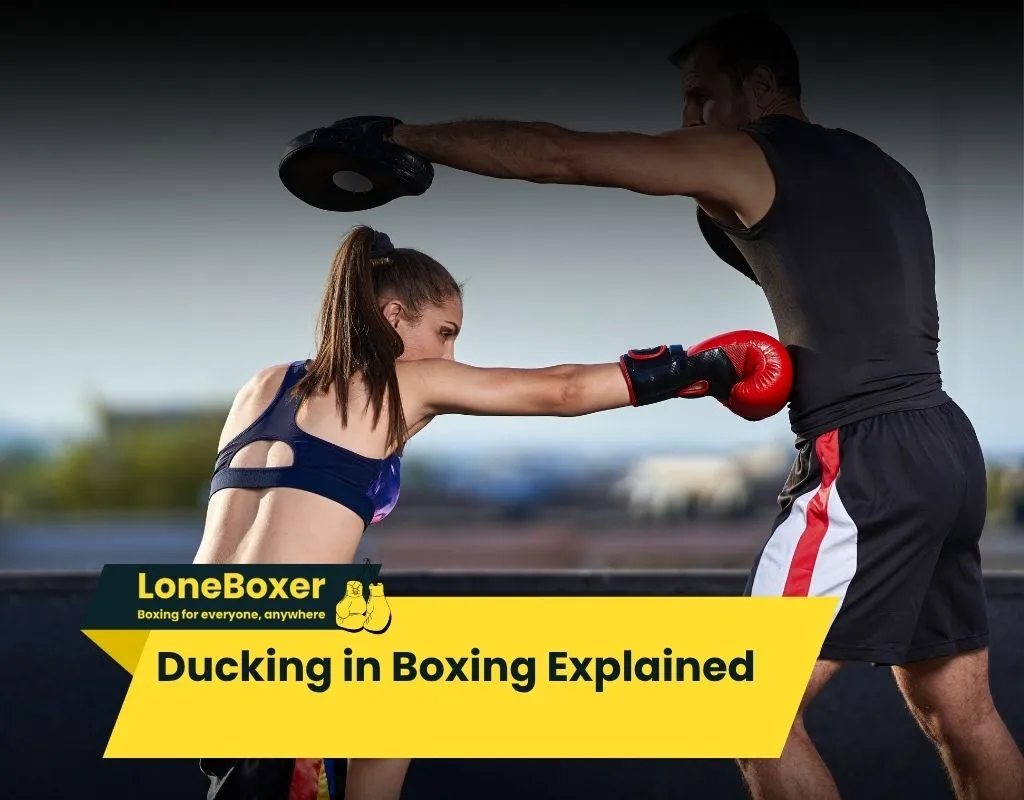
Ducking is a defensive boxing technique where a fighter bends their knees and lowers their body to dodge high punches, such as crosses and hooks. It’s a blend of evasion and balance, requiring a lot of energy and quick reflexes to react to an opponent’s attacks. On the other hand, the slip, a more efficient maneuver, is more about rotating the shoulders and hips to let punches pass by the head. Practicing these maneuvers allows fighters to use duck and slip in combination, increasing the effectiveness of defense.
How to Duck Punches in Boxing?
Ducking involves bending the knees, lowering the level of the body, and staying balanced while a punch passes overhead. The boxer should keep their eyes on the opponent, keep their hands up, and avoid folding too far forward. Good ducking creates opportunities to counter as soon as the punch misses.
When to Use Ducking for Avoiding Punches?
Ducking is best utilized when anticipating a high strike, such as a hook or a cross. It’s a defensive maneuver that lowers the head from the line of attack, allowing a punch to pass overhead. However, timing is crucial; duck too early and you risk telegraphing your move, duck too late and you’ll still get hit. It’s important to maintain balance while ducking to enable quick counterattacks or further defensive actions.
What are the Common Mistakes When Avoiding Punches By Ducking?
Fighters often misjudge distance, leading to overcommitting and losing balance when ducking. They also drop their hands, exposing their head to counterattacks. Some neglect to keep their eyes on the opponent, thus becoming vulnerable to follow-up strikes. Additionally, excessive ducking can telegraph movements, allowing opponents to anticipate and exploit the pattern.
When fighters repeatedly duck in a predictable pattern, they become susceptible to uppercuts, which can exploit the openings created by their movements. This vulnerability arises because predictable ducking telegraphs their actions to opponents, enabling them to anticipate and time their uppercuts effectively. As a result, fighters risk getting caught off guard and struck with powerful uppercuts if they fall into a repetitive ducking pattern. Therefore, it’s crucial for fighters to vary their defensive movements to avoid becoming predictable and to maintain awareness of potential counterattacks, including uppercuts, when employing defensive maneuvers.
What’s Duck and Slip in Boxing?
Duck and slip in boxing are defensive maneuvers. A boxer ducks by bending at the knees quickly to avoid high punches, typically hooks or other high punches. Slipping involves a slight rotation of the body off the line of attack. With slipping, the boxer usually evades straight punches. Both techniques can be used consecutively to avoid opponents’ combinations.
How to Duck and Slip in Boxing?
In boxing, ducking involves bending the knees and lowering the body swiftly to evade a punch. To execute, a boxer bends at the knees, not the waist, maintaining balance and readiness to counterattack.
Slipping, on the other hand, requires a slight rotation of the shoulders and hips to let an incoming punch pass by the head. The boxer’s movement is minimal, often a few inches, to maintain proximity for a quick response.
Practice for both maneuvers involves drills with a partner or shadowboxing, focusing on timing and fluidity. Consistent training hones reflexes, thus enabling a fighter to duck and slip effectively during bouts.
Incorporating head movement into combinations can make a boxer elusive and unpredictable. However, overusing these techniques can lead to fatigue or create patterns an opponent might exploit. Used well, these movements make a boxer harder to hit and better positioned to counter.
Is Ducking and Weaving the Same as Bobbing and Weaving?
“Bob and weave” is the more common boxing term for combining level changes with side-to-side head movement. “Duck and weave” is sometimes used informally to describe a similar action.
What’s The Difference Between Duck and Weave vs. Bob and Weave?
In practice, “duck and weave” and “bob and weave” are often used similarly, but “bob and weave” is the more standard boxing phrase. Both describe defensive movement that combines lowering the body and moving the head off-line to avoid punches and create countering angles.